
Certifications and Standards on Home Products: Which Ones Matter

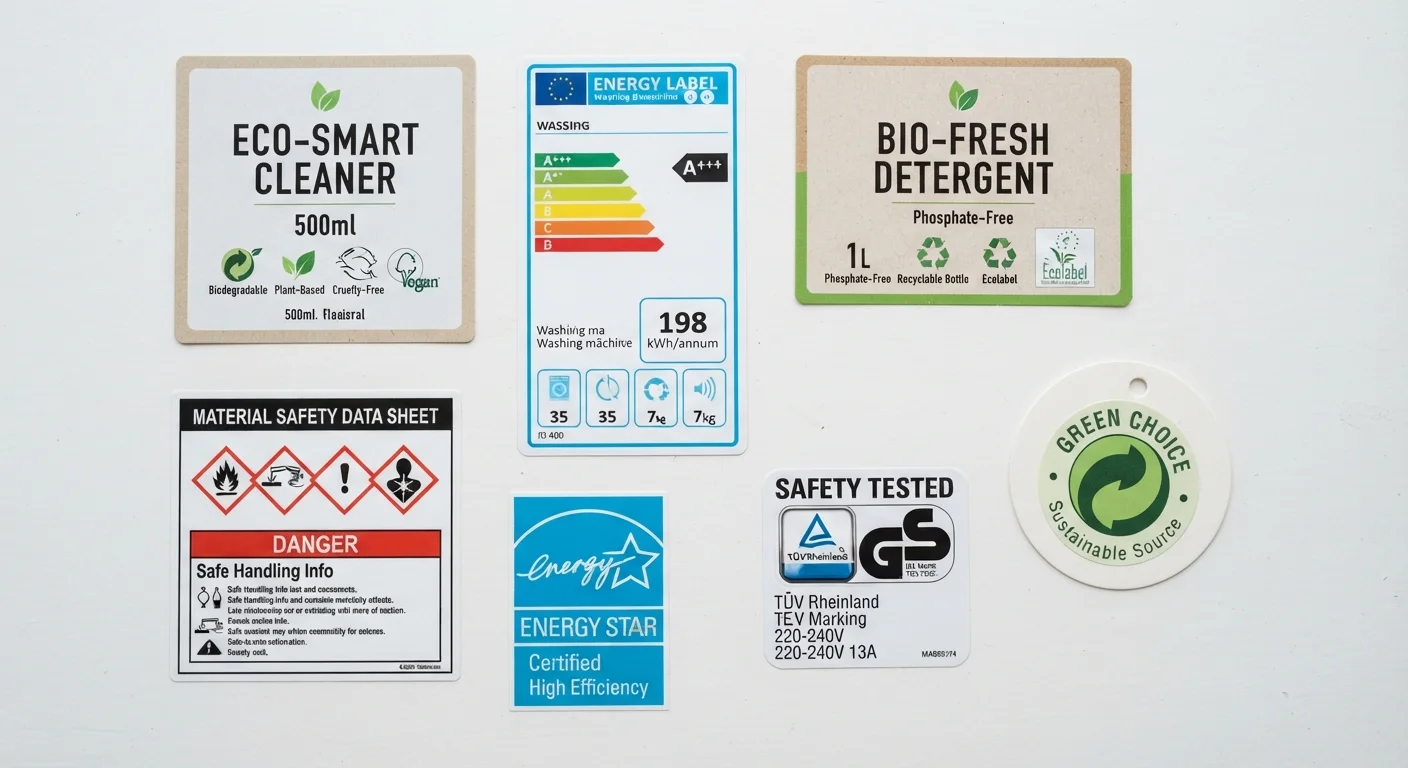
Photo: UnlockTopics.com | Unlocking Trending Content editorial
Why Certification Labels Vary So Much in Credibility
Walk through any home goods aisle and you'll encounter a mosaic of logos, seals, and checkmarks - some from federal agencies, some from industry groups, and some that manufacturers print themselves. The critical distinction is who is doing the verifying. Third-party certifications require independent testing by an accredited organization. First-party claims (such as a brand's own "eco-friendly" badge) require no outside validation at all.
Understanding this difference is the first step to reading labels critically. A certification only means something if the organization behind it sets clear standards, tests products against them, and removes the mark when products fall out of compliance. For home purchases specifically, this matters across three main categories: energy efficiency, safety, and material/chemical composition.
See our guide to evaluating durability before you buy for complementary signals worth examining beyond certification marks.
| ENERGY STAR administered by | U.S. Environmental Protection Agency (EPA) |
| EnergyGuide labels required by | Federal Trade Commission (FTC) |
| OSHA NRTL examples | UL, CSA Group, Intertek (ETL) |
| "Natural" label - U.S. regulatory definition | None for most home products |
| OEKO-TEX verification method | Unique license number, searchable on OEKO-TEX website |
| FSC certification audited by | Accredited third-party certifiers |
Energy and Efficiency Certifications
ENERGY STAR is a U.S. Environmental Protection Agency program. Products carrying this mark - appliances, lighting, HVAC equipment, windows - have been independently tested and verified to meet efficiency thresholds set by the EPA. The program publishes its criteria publicly, making it one of the more transparent efficiency labels available to U.S. consumers.
EnergyGuide labels (the yellow tags on appliances) are federally required by the Federal Trade Commission for most major home appliances. They don't certify a product as efficient; they disclose estimated annual energy use and cost so you can compare models on a common scale. Think of it as a nutrition label for electricity consumption.
For insulation and building products, R-value ratings describe thermal resistance - a standardized measure, not a brand claim. When evaluating insulation options for your home, our insulation materials comparison explains how R-value interacts with material type.
75+
Product categories covered by ENERGY STAR
According to the U.S. EPA, the ENERGY STAR program spans more than 75 categories of products and buildings, from refrigerators to commercial HVAC systems.
No standard
U.S. regulatory definition of "eco-friendly" on home goods
The FTC's Green Guides advise against unqualified environmental claims, but many product labels still use undefined terms with no verification requirement.
Safety Certifications: Electrical and Structural Products
For electrical products, look for marks from Nationally Recognized Testing Laboratories (NRTLs) - a category designated by OSHA. UL (Underwriters Laboratories) is the most widely recognized in the U.S., but other NRTLs like CSA Group and Intertek (ETL mark) carry equivalent standing. These organizations test products against published safety standards; their marks indicate the product met those standards at the time of testing.
Counterfeit safety marks exist. If a mark looks unfamiliar, the OSHA NRTL website lists all recognized laboratories and their approved marks - a reliable cross-reference before assuming a seal is legitimate.
For children's products specifically, ASTM International (formerly the American Society for Testing and Materials) publishes widely adopted voluntary standards. Products labeled as meeting ASTM F963, for example, have been tested against the U.S. toy safety standard. The Consumer Product Safety Commission (CPSC) enforces mandatory safety rules and publishes recall databases worth bookmarking for any home with young children.
Material and Chemical Content Certifications
This category sees the widest variation in rigor. Some certifications are robust; others are marketing language in disguise.
GREENGUARD and GREENGUARD Gold (administered by UL) certify that products - paints, flooring, furniture - meet chemical emission limits for volatile organic compounds (VOCs). GREENGUARD Gold applies stricter thresholds for environments like schools and healthcare facilities. Both are third-party verified.
OEKO-TEX STANDARD 100 certifies textiles - bedding, towels, upholstery fabrics - tested for harmful substances including pesticide residues, heavy metals, and formaldehyde. Each certified product carries a unique license number you can verify on the OEKO-TEX website.
FSC (Forest Stewardship Council) certification on wood products indicates the timber came from forests managed to specific environmental and social standards. It's audited by accredited third-party certifiers, making it more credible than vague terms like "sustainably sourced."
In contrast, terms like "natural," "non-toxic," or "eco" on home products have no standardized regulatory definition in the U.S. and require no verification. They signal marketing intent, not independently confirmed properties. For a deeper look at how label language works on cleaning products specifically, see our article on decoding product labels on cleaning supplies.
Third-party certification
Verification of a product's claims by an independent organization that has no financial stake in the outcome. The certifier tests against published criteria and awards - or withholds - the mark based on results.
NRTL (Nationally Recognized Testing Laboratory)
A category of independent safety testing laboratory recognized by OSHA to test products against national consensus safety standards. Products bearing an NRTL mark have been tested for specific safety hazards.
VOC (Volatile Organic Compound)
Organic chemicals that evaporate at room temperature and can affect indoor air quality. Many paints, adhesives, and flooring materials emit VOCs; certifications like GREENGUARD set limits on acceptable emission levels.
R-value
A standardized measurement of thermal resistance used for insulation materials. Higher R-values indicate greater resistance to heat flow. It is a defined technical measure, not a brand or marketing claim.
First-party claim
A label or statement created and applied by the manufacturer itself, with no independent verification. Examples include self-printed eco badges or proprietary quality seals with no external auditor.
OEKO-TEX STANDARD 100
An independently administered certification for textile products confirming they have been tested for a defined list of harmful substances including pesticide residues, heavy metals, and formaldehyde. Each certificate is publicly verifiable.
The content on this site is for informational purposes only and is not a substitute for professional advice. Always consult a qualified professional for guidance specific to your situation.