
The Honest Trade-Offs of Minimalist Home Organization

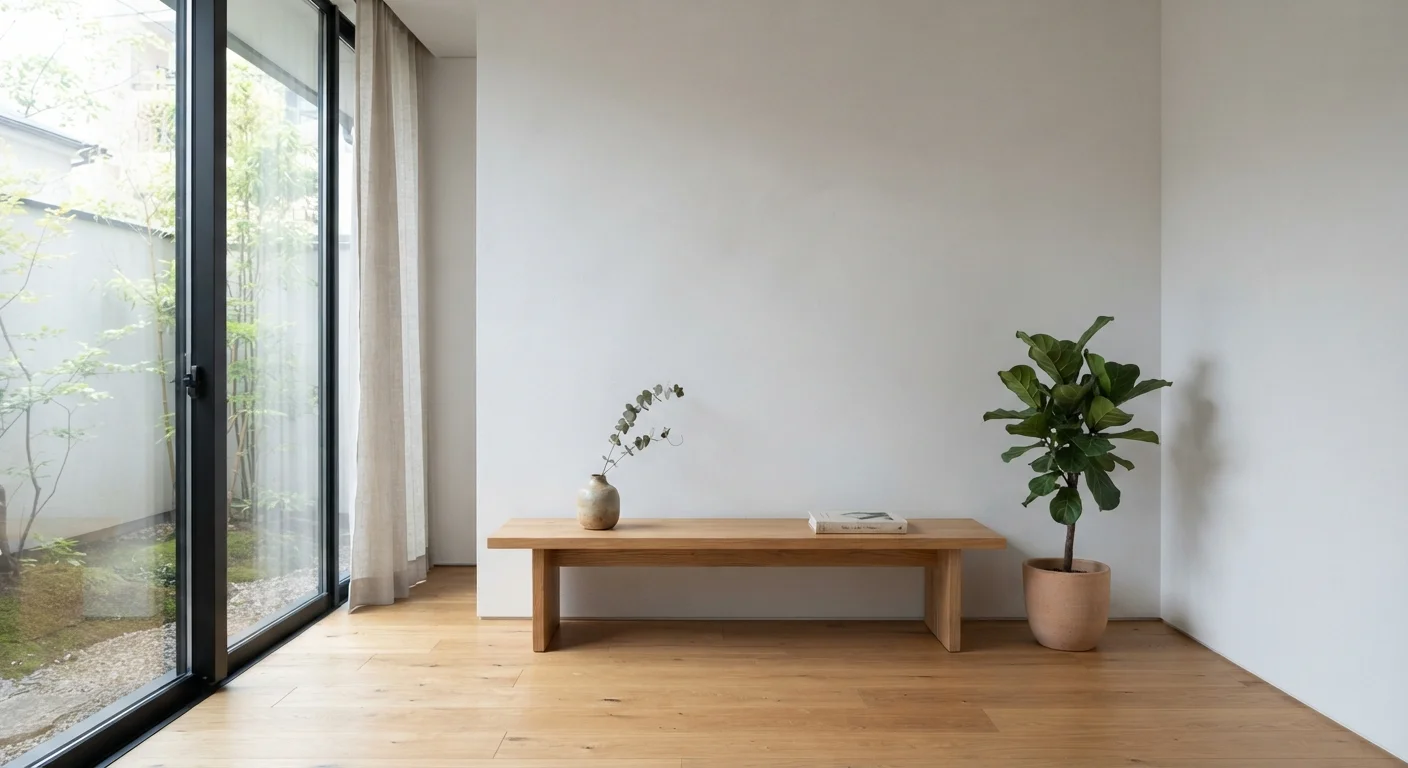
Photo: UnlockTopics.com | Unlocking Trending Content editorial
Key Takeaways
- Minimalism reduces visual clutter and can make cleaning and maintaining a home significantly easier.
- Paring down possessions requires ongoing decisions that some people find stressful or emotionally difficult.
- A minimalist approach works best for people with stable, predictable lifestyles and personal comfort with restraint.
- Minimalism is a spectrum - partial adoption often delivers meaningful benefits without demanding all-or-nothing commitment.
- Shared households face extra friction when residents have different tolerances for sparse living.
Reduces daily cleaning time and maintenance effort
Fewer objects on surfaces means less dusting, rearranging, and searching. Many people who simplify their homes report that routine cleaning becomes noticeably faster.
Creates a visually calmer living environment
Uncluttered spaces are widely reported to feel more restful. Environmental psychology research suggests that visual complexity in the home is linked to elevated stress responses in some individuals.
Makes it easier to find and return items
When fewer things compete for space and every item has a designated place, the system is simpler to maintain - and you spend less time searching for misplaced objects.
Reduces impulse purchases over time
Living with less tends to sharpen awareness of what actually gets used. Many people find that a minimalist mindset naturally curbs unnecessary spending because the cost of adding clutter becomes tangible.
Supports more intentional purchasing decisions
A household focused on owning less tends to spend more thought - and sometimes more money - on items that will last, rather than accumulating low-quality duplicates.
Initial decluttering is time-consuming and emotionally taxing
Getting to a minimalist baseline requires working through years of accumulated possessions, many of which carry sentimental weight. This process takes longer and feels harder than most guides suggest.
Ongoing discipline is required to maintain the system
Minimalism isn't a one-time project - it requires consistent decisions about what enters the home. Without that ongoing attention, clutter tends to return gradually.
Can conflict with hobbyist or multi-interest lifestyles
People with active hobbies - woodworking, cooking, crafting, gardening - typically need specific tools and supplies that don't fit neatly into a stripped-down system.
Sparse environments feel cold or unwelcoming to some
Not everyone finds minimal spaces calming. For many people, objects, books, and personal items make a space feel lived-in and comfortable rather than stressful.
Creates friction in shared or family households
When residents have different tolerance levels for sparseness, one person's minimalist ideal can feel like deprivation to another. Compromise often dilutes the system's benefits.
Risk of over-purging and regretting discarded items
Enthusiasm for decluttering can lead to removing things that turn out to be genuinely useful or meaningful. Replacing discarded items later can cost more than keeping them would have.
What Minimalist Home Organization Actually Means
Minimalist home organization isn't simply owning less - it's a deliberate approach to deciding what earns space in your home and what doesn't. The idea is that every object should justify its presence, either through regular use, genuine meaning, or functional necessity.
In practice, this tends to mean fewer decorative objects, consolidated storage, and systems that stay orderly without constant effort. The appeal is real: less stuff generally means less to clean, less to lose, and fewer decisions about where things go. But the path there involves trade-offs that home organization guides don't always spell out honestly.
If you're rethinking how your kitchen is set up, the strategies for small kitchens with limited counter space offer a grounded starting point for applying restraint where it counts most.
The Real Advantages
The benefits of minimalist organization are well-documented by people who've lived this way consistently - not as a trend, but as an ongoing household system.
Reduces daily cleaning time and maintenance effort
Fewer objects on surfaces means less dusting, rearranging, and searching. Many people who simplify their homes report that routine cleaning becomes noticeably faster.
Creates a visually calmer living environment
Uncluttered spaces are widely reported to feel more restful. Environmental psychology research suggests that visual complexity in the home is linked to elevated stress responses in some individuals.
Makes it easier to find and return items
When fewer things compete for space and every item has a designated place, the system is simpler to maintain - and you spend less time searching for misplaced objects.
Reduces impulse purchases over time
Living with less tends to sharpen awareness of what actually gets used. Many people find that a minimalist mindset naturally curbs unnecessary spending because the cost of adding clutter becomes tangible.
Supports more intentional purchasing decisions
A household focused on owning less tends to spend more thought - and sometimes more money - on items that will last, rather than accumulating low-quality duplicates.
Lower maintenance is probably the most underrated payoff. When surfaces are largely clear and storage is consolidated, cleaning takes less time and tidying after guests or a busy week is faster. There's also a cognitive dimension: research in environmental psychology suggests that cluttered visual fields are associated with higher perceived stress, though individual responses vary considerably.
For home offices in particular, a leaner approach to what stays on the desk tends to support focus. See how that principle applies in our guide to building a home office that holds up under daily use.
The Honest Disadvantages
Minimalism has a curated, aspirational image that can make its downsides easy to overlook. Here's what often goes unmentioned.
Initial decluttering is time-consuming and emotionally taxing
Getting to a minimalist baseline requires working through years of accumulated possessions, many of which carry sentimental weight. This process takes longer and feels harder than most guides suggest.
Ongoing discipline is required to maintain the system
Minimalism isn't a one-time project - it requires consistent decisions about what enters the home. Without that ongoing attention, clutter tends to return gradually.
Can conflict with hobbyist or multi-interest lifestyles
People with active hobbies - woodworking, cooking, crafting, gardening - typically need specific tools and supplies that don't fit neatly into a stripped-down system.
Sparse environments feel cold or unwelcoming to some
Not everyone finds minimal spaces calming. For many people, objects, books, and personal items make a space feel lived-in and comfortable rather than stressful.
Creates friction in shared or family households
When residents have different tolerance levels for sparseness, one person's minimalist ideal can feel like deprivation to another. Compromise often dilutes the system's benefits.
Risk of over-purging and regretting discarded items
Enthusiasm for decluttering can lead to removing things that turn out to be genuinely useful or meaningful. Replacing discarded items later can cost more than keeping them would have.
The decision fatigue involved in paring down is frequently underestimated. Deciding what to keep, what to donate, and what genuinely serves you requires time and emotional energy - especially for items with sentimental value. And unlike a one-time declutter, minimalism as a household system requires ongoing decisions every time something new enters the home.
Shared living introduces additional friction. When partners, housemates, or children have different comfort levels with sparse environments, the pressure to maintain a minimalist standard can become a source of real tension. Our article on organizing shared spaces with different standards addresses this dynamic directly.
Minimalism Looks Different in Every Home
Who It Tends to Work For - and Who It Doesn't
Minimalist organization tends to work well for people with stable, predictable routines and a genuine comfort with restraint. If you naturally feel lighter when a room is spare, the upkeep of a minimalist system will feel intuitive rather than effortful.
It's a harder fit for households with young children, active hobbyists, or people who find sparse environments cold or anxiety-inducing rather than calming. Owning the tools for five different hobbies isn't waste if those hobbies are genuinely part of your life. Forcing a minimalist framework onto that reality tends to create inconvenience rather than calm.
1 in 4
US households report garage too cluttered to park a car
According to a UCLA Center on Everyday Lives of Families study, a significant proportion of American homes struggle with storage overflow despite available space.
~27 min
Average daily time spent searching for misplaced items
Various time-use surveys suggest that American adults collectively lose meaningful time each day locating items in disorganized households, though estimates vary by study.
A useful reframe: minimalism is a spectrum, not a binary. Adopting minimalist principles selectively - keeping one category of the home deliberately pared down while allowing more flexibility elsewhere - often delivers more durable benefits than attempting a whole-home transformation. Before making significant purchasing decisions around storage or home upgrades, it's worth thinking through the needs vs. wants framework for home buying to avoid trading one form of clutter for another.
The content on this site is for informational purposes only and is not a substitute for professional advice. Always consult a qualified professional for guidance specific to your situation.