
Organizing a Small Kitchen When Counter Space Is Already Gone

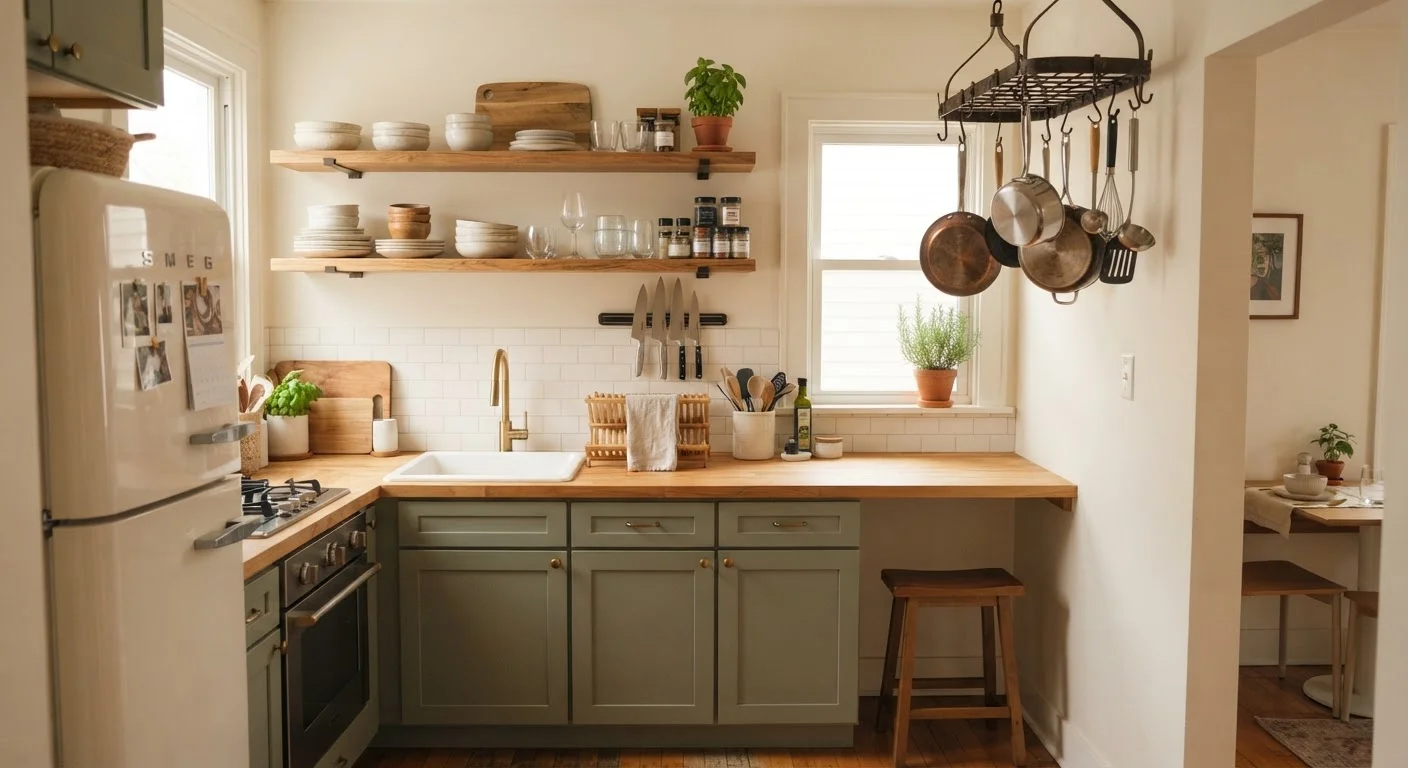
Photo: UnlockTopics.com | Unlocking Trending Content editorial
Key Takeaways
- Countertop clutter usually signals a storage system problem, not a space problem.
- Relocating rarely-used items frees the most counter space with the least effort.
- Vertical wall space above counters is one of the most underused storage zones in small kitchens.
- A consistent return-to-home habit matters more than any single organizer purchase.
- Small kitchens benefit more from editing what's kept than from adding more storage containers.
Why Small Kitchens Stay Cluttered
The problem in most small kitchens isn't that there's nowhere to put things - it's that everything has drifted to the counter because it was the easiest place to set it down. The toaster stays out because the cabinet is full. The cutting board leans against the backsplash because returning it is one step too many. Over time, the counter becomes default storage, and actual cooking becomes an act of negotiation around the mess.
The fix isn't buying a new organizer. It's identifying why things landed on the counter in the first place, then solving that root cause. That might mean rearranging a cabinet, relocating a rarely-used appliance, or simply deciding that something doesn't need to live in the kitchen at all. This guide walks through that process in a sequence that produces real results without requiring a renovation.
If your organizational challenges extend beyond the kitchen, the principles discussed in organizing shared living spaces are worth reading alongside this guide.
What You'll Need Before You Start
No special tools are required, but a few items make the process smoother and prevent backsliding once you're done.
What you will need
Painter's tape and marker
Temporarily label cabinet zones and shelf tiers during reorganization so you don't lose track of your system mid-process.
Measuring tape
Check shelf heights and wall spans before adding any hooks, rails, or organizers to ensure a proper fit.
Shelf riser or stackable shelf insert
Doubles usable cabinet space by creating a second tier within a single shelf opening.
Over-door organizer or wall rail with hooks
Moves frequently used utensils or small items off the counter and onto otherwise unused vertical surfaces.
Step-by-Step: Reclaiming Your Counters
Work through these steps in order. Each one builds on the last, and skipping ahead typically means you'll run out of places to put things mid-process.
Clear the counters completely - everything off
Remove every single item from the countertops and set them on a nearby table or floor. This is not a purge yet - just a reset. Seeing the full bare counter surface resets your perception of what's actually available and makes it impossible to accidentally tidy around things that don't belong there.
Sort everything into three honest groups
Go through every item you just removed and assign it to one of three categories:
- Daily use: touched at least four times per week (coffee maker, knife block, dish rack)
- Occasional use: used once a week or less (stand mixer, blender, specialty tools)
- Rarely or never used: hasn't been used in the past two months
Be honest. Most people discover the counter was holding two or three daily items and a dozen occasional or rarely-used ones.
Remove rarely-used items from the kitchen entirely
Items in the rarely-used group should leave the kitchen. Options include a pantry shelf, a hall closet, under a bed in a storage bin, or donation if you haven't used the item in six months or more. Appliances like a waffle iron used twice a year don't need kitchen real estate.
Reorganize cabinet interiors to absorb occasional-use items
Open every cabinet and drawer. Look for dead vertical space - most cabinets have a full 6-8 inches of air above stacked items. A simple shelf riser can turn that into usable storage. Move occasional-use appliances into these newly created spots. Nest bowls and pots more deliberately. Relocate items stored in the wrong cabinet based on where you actually use them.
Return only genuine daily-use items to the counter
The only items that earn permanent counter space are those you use every day and that would genuinely slow you down if stored elsewhere. For most households, that's three to five items maximum. Everything else that passed as a daily-use item should be tested: put it in a cabinet for one week and see if the inconvenience is real or imagined.
Assign a specific home to every remaining item
Every item that stays in the kitchen - whether on the counter or in a cabinet - needs a defined location. Vague systems ("spices go somewhere in here") break down fast in small kitchens. Specific systems ("spatulas are in the second drawer left of the stove") hold up under daily use and make it easy for everyone in the household to maintain the order.
Editing Beats Organizing Every Time
Maintaining Order in a Tight Space
The organizing work you've done will only hold if items reliably return to their assigned spots. In a small kitchen, even two or three misplaced objects can make the counter feel chaotic again. The most effective maintenance habit is a nightly two-minute reset: scan the counters and return anything that's drifted.
Beyond habits, think about where more vertical capacity could help. A wall-mounted magnetic knife strip, a rail system with hooks, or open shelving above the counter can hold items that would otherwise land on the surface. Vertical storage strategies deserve serious consideration in any kitchen where cabinet space is genuinely exhausted.
When considering any purchases to support your new system - whether shelving brackets, drawer dividers, or wall rails - the smart shopping hub offers practical frameworks for evaluating household buys without overspending. And if you've found these spatial principles useful, many of them translate directly to other compact rooms: small bathroom organization follows a similar logic of editing, vertical thinking, and assigned homes for each item.
Avoid Over-Buying Storage Products
The content on this site is for informational purposes only and is not a substitute for professional advice. Always consult a qualified professional for guidance specific to your situation.