
Understanding Stopping Distances: The Gap Between Speed and Safety

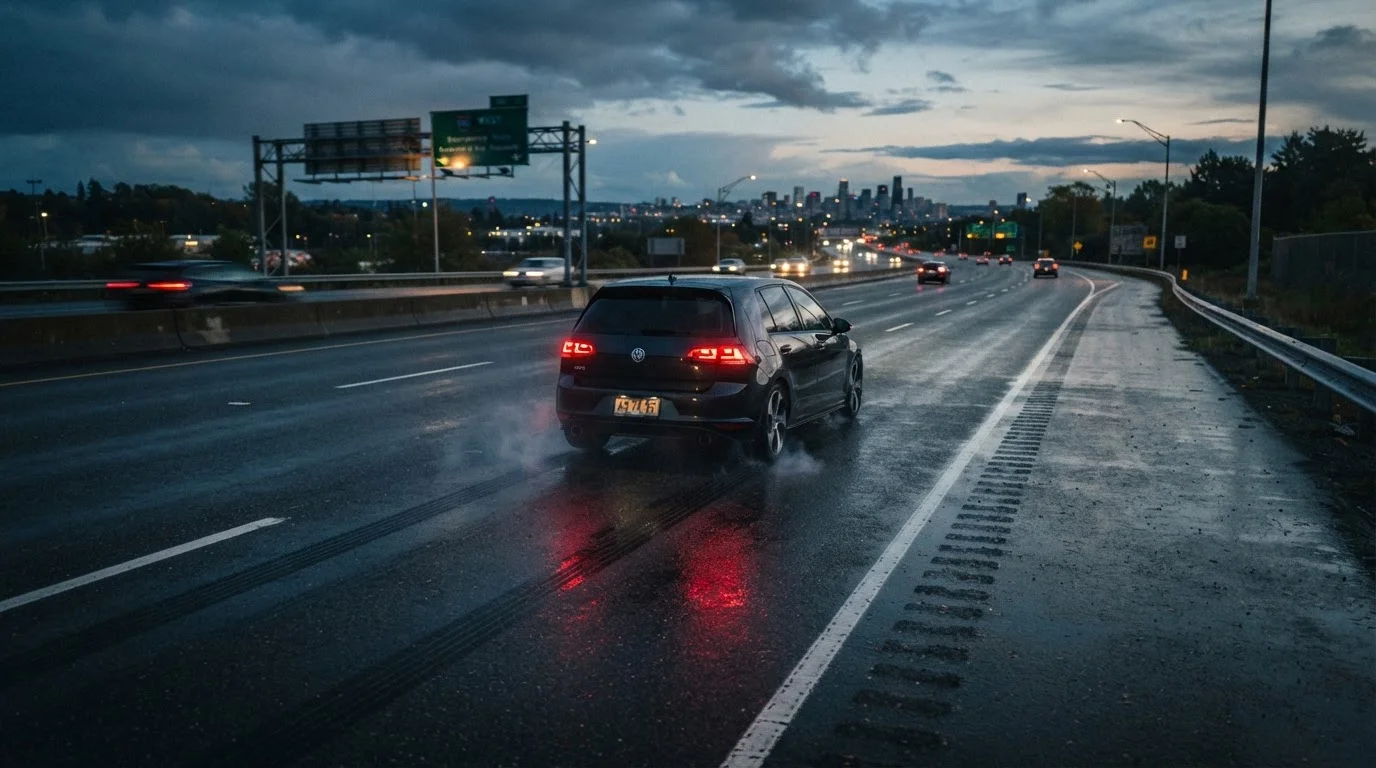
Photo: UnlockTopics.com | Unlocking Trending Content editorial
Key Takeaways
- Stopping distance has two components: thinking distance and braking distance - both increase with speed.
- Doubling your speed quadruples braking distance, not just doubles it.
- Wet, icy, or gravel-covered roads can multiply braking distances dramatically.
- Driver fatigue, distraction, and impairment all extend thinking distance.
- Vehicle load, tire condition, and brake health directly affect how quickly a car can stop.
- Maintaining a larger following gap is the simplest way to give yourself enough stopping room.
The Two-Part Equation Drivers Often Overlook
Most drivers think of stopping as a single action - hit the brakes, car stops. In reality, it's a two-stage process, and the first stage is entirely in your head.
Thinking distance is the ground your vehicle covers between the moment your brain registers a hazard and the instant your foot depresses the brake pedal. Average human reaction time hovers around 1.5 seconds under normal conditions, but fatigue, distraction, alcohol, or medication can push that well above two seconds. At 60 mph, a 1.5-second reaction time means your car has already traveled 132 feet before you've touched the brake.
Braking distance begins the moment the brakes engage and ends when the car reaches a full stop. Unlike thinking distance, braking distance is governed by physics: it scales with the square of speed. That relationship is what most drivers underestimate. See our guide to smooth acceleration and braking for how this physics plays out in everyday driving habits.
132 ft
Distance covered at 60 mph during 1.5-second reaction time
Based on standard physics calculations using average human reaction time under normal conditions.
4×
Increase in braking distance when speed doubles
Because braking distance scales with the square of speed, doubling from 30 to 60 mph quadruples - not doubles - the distance required.
2×
Approximate stopping distance increase on wet roads
Wet pavement significantly reduces tire-to-road friction; highway safety guidelines consistently reflect this doubling effect.
How Road Conditions Multiply the Numbers
Published stopping distance figures typically assume ideal conditions: a dry, well-maintained road surface, properly inflated tires, and a fully functional braking system. Real-world driving rarely offers all three simultaneously.
On wet pavement, the friction coefficient between tire and road drops noticeably - stopping distances can roughly double. Ice reduces that friction further still, with stopping distances potentially increasing by eight to ten times compared to dry asphalt. Even loose gravel or fallen leaves introduce unpredictable slip.
Tire condition plays an equally significant role. Tread depth affects how effectively water is displaced from the contact patch. Underinflated tires alter the shape of that contact patch, reducing grip. The hidden effects of vehicle load on handling and stopping distance compound these surface-related factors further - a fully loaded SUV on a wet road requires substantially more space to stop than an empty one on dry pavement.
Adjust Your Gap Before You Need It
Brake System Health: The Variable You Control
Thinking distance is influenced by human factors; braking distance is shaped by both physics and mechanical condition. A well-maintained braking system - adequate pad thickness, true rotors, clean brake fluid - performs closer to its designed specification. A neglected one extends the distance your car needs to halt.
Brake fade is another concern: sustained heavy braking heats rotors and pads, temporarily reducing stopping effectiveness. This is particularly relevant on long downhill grades when drivers ride the brakes continuously rather than using engine braking to control speed.
Understanding why brake maintenance matters is the first step toward doing it on schedule. Why brake maintenance gets neglected - and the consequences covers the warning signs drivers commonly overlook until it's too late.
Translating Stopping Distance Into Safer Habits
Knowing the theory is useful; adjusting your driving is what counts. A few practical habits meaningfully reduce the risk that stopping distance becomes insufficient.
- Increase following distance. The three-second rule is a minimum. In rain, at night, or when fatigued, four to five seconds is more appropriate. Measure it by picking a fixed roadside point.
- Reduce speed before corners, not during. Braking while turning divides the tire's grip budget between slowing and steering - not ideal for either task.
- Scan further ahead. Experienced drivers identify developing hazards earlier, giving themselves more time - and therefore more distance - to respond without emergency braking. Reading the road ahead is a skill that directly reduces how often full stopping distance is tested.
- Account for conditions, not just speed limits. A posted limit reflects ideal conditions. When conditions are not ideal, the appropriate speed is lower.
This article provides general road safety information for educational purposes. Always follow local traffic laws and adapt your driving to the specific conditions you encounter.
Frequently Asked Questions
The content on this site is for informational purposes only and is not a substitute for professional advice. Always consult a qualified professional for guidance specific to your situation.