
Smarter Driving

Reading the Road: How to Anticipate Traffic Instead of Reacting to It

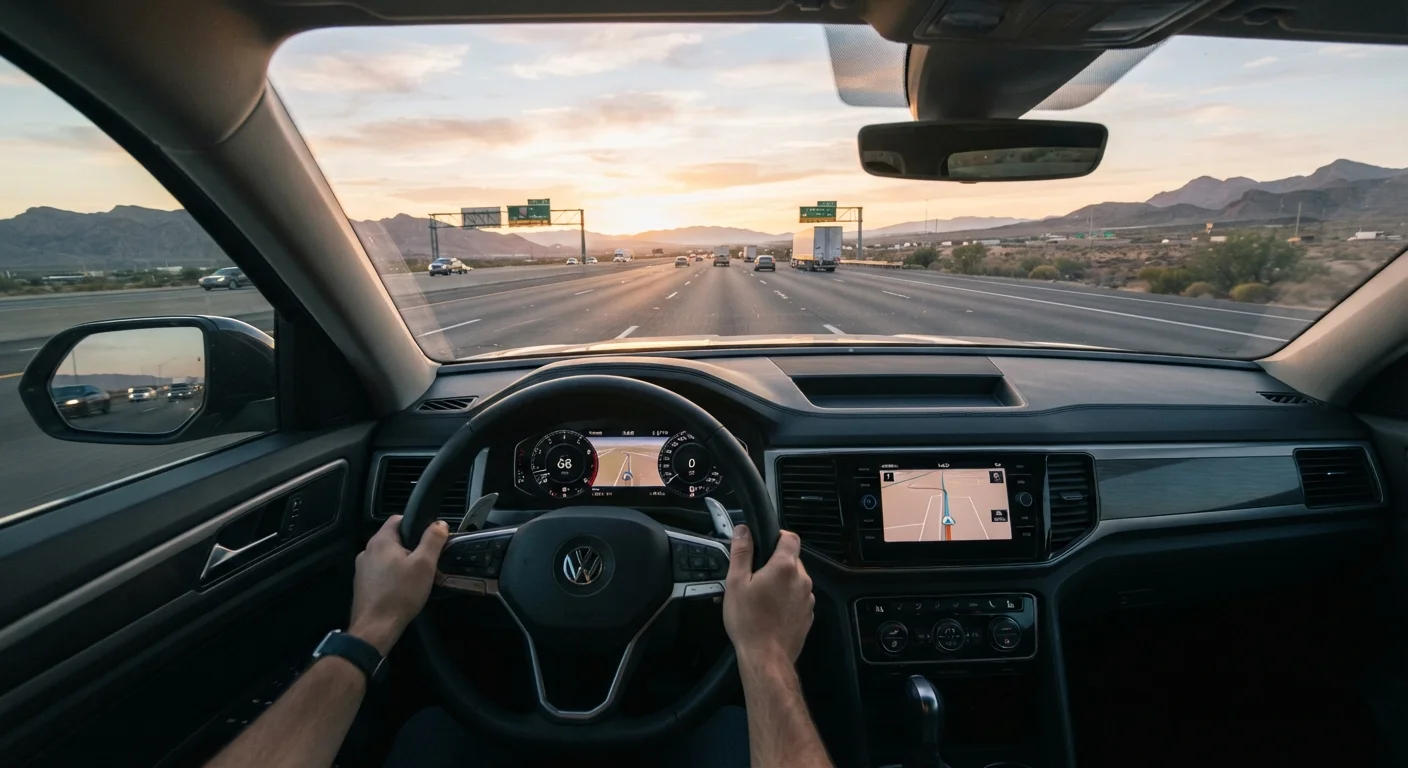
Reading the Road: How to Anticipate Traffic Instead of Reacting to It

Photo: UnlockTopics.com | Unlocking Trending Content editorial

Experienced drivers scan further ahead and brake less often. This guide explains the observational habits that make driving smoother and safer.

Key Takeaways

  • Experienced drivers look 12–15 seconds ahead, giving them time to respond rather than react.
  • Anticipating traffic flow reduces hard braking, which saves fuel and reduces brake wear.
  • Reading brake lights, road geometry, and driver behavior provides early warning of hazards.
  • Following distance is your buffer zone — it gives anticipation habits room to work.
  • Smooth, predictable inputs from you also make driving easier for everyone around you.

Why Anticipation Beats Reaction Every Time

Most drivers learn to respond to what's immediately in front of them. That approach works — until it doesn't. A driver who reacts is always playing catch-up: braking hard, swerving late, or getting caught in a slowdown they had three seconds to avoid. A driver who anticipates has already lifted off the gas before the problem fully forms.

This isn't an innate skill. It's a set of habits built by deliberate attention over time. The good news is that the core techniques are straightforward, and each one compounds the others. Once you start scanning further ahead, you'll naturally drive smoother — and smoother driving means less brake wear, better fuel economy, and lower collision risk. It's one of the clearest examples of how skill and safety reinforce each other on the road.

For a broader look at how driving behavior affects your car's longevity, see habits that quietly shorten a car's lifespan.

The Core Practices of Anticipatory Driving

The following practices form the foundation of reading the road effectively. They work together — each one builds on the last.

1

Extend your visual horizon to 12–15 seconds ahead

Most new drivers focus on the car immediately in front of them, which leaves almost no time to respond to developing situations. Scanning further down the road — around 12 to 15 seconds of travel time at your current speed — gives you the information needed to make decisions before they become urgent. This is the foundational habit that everything else builds on.
Example: On a highway at 60 mph, 15 seconds of travel covers roughly a quarter mile. Train yourself to track not just the nearest car, but the cluster of brake lights two or three vehicles ahead.
2

Read brake lights as traffic intelligence, not just warnings

A single set of brake lights directly ahead is a warning. A ripple of brake lights spreading back through traffic two or three cars ahead is a pattern — it tells you where the compression point is and how fast it's moving toward you. Treating brake lights as data rather than simple stop signals gives you a critical head start.
Example: If you see brake lights flashing intermittently in a cluster 400 yards ahead, begin easing off the accelerator immediately rather than waiting until the slowdown reaches the car in front of you.
3

Anticipate hazards from road geometry, not just vehicle behavior

Curves, crests, merging lanes, and intersection approaches all create predictable blind spots and compression points. A driver who reads the road's shape knows where traffic will bunch, where vehicles may appear suddenly, and where sightlines will narrow — before those conditions arrive.
Example: When approaching a blind crest on a two-lane road, ease off the gas slightly and move closer to the right edge of your lane — not because you can see a hazard, but because you know the geometry creates one.
4

Watch the behavior of other drivers, not just their vehicle positions

A car drifting toward a lane line, a driver glancing repeatedly into mirrors, or a vehicle slowing without obvious reason are all behavioral signals that something may change. Experienced drivers read driver intent, not just vehicle trajectory. This dramatically expands the warning time available.
Example: If a car in the adjacent lane is repeatedly checking mirrors and moving slightly toward your lane, create extra lateral space proactively — the driver is likely preparing to merge, whether or not they've signaled.
5

Use your mirrors on a regular scan cycle, not just when you need them

Anticipatory driving isn't just about what's ahead — it's about maintaining a complete mental picture of your surroundings. Regular mirror checks (roughly every five to eight seconds) mean you always know where nearby vehicles are, so you're never surprised when you need to change your position.
Example: Adopt a repeating scan pattern: road ahead, left mirror, center mirror, right mirror, then back to road ahead. Done consistently, this becomes automatic within a few weeks of deliberate practice.

Following Distance: The Buffer That Makes Everything Else Work

No anticipation technique works without adequate space in front of you. Following distance isn't just a safety rule — it's the physical buffer that converts your early observations into smooth, unhurried responses. When you spot brake lights two cars ahead, a proper gap lets you coast rather than brake sharply.

Coasting Is a Skill, Not Laziness

When you spot a slowdown ahead and lift off the gas early, you're doing something active: converting your kinetic energy gradually rather than dumping it through the brakes. This reduces brake wear, smooths your ride, and often means you never need to stop fully if traffic is flowing. It's one of the clearest examples of anticipation producing a direct mechanical benefit.

The standard guidance in the US is the three-second rule: pick a fixed point, wait for the car ahead to pass it, then count. Your car should take at least three seconds to reach the same point. In wet or poor-visibility conditions, double that gap. On highways at speed, even four to five seconds is a reasonable target.

Maintaining that distance also makes you more predictable to drivers behind you — your slowing down will be gradual enough that they have time to respond without emergency braking. Smooth inputs cascade through traffic in both directions. This connects directly to the principles covered in smooth acceleration and braking.

Apply These Habits Today

Knowing the theory is one thing. These quick-start actions will help you begin shifting from reactive to anticipatory driving on your very next trip.

high On your next drive, consciously push your gaze further down the road and identify one piece of traffic information — a brake light cluster, a merging vehicle, a slowing truck — before it affects the car directly in front of you.
high Check your following distance using the three-second rule at the start of every highway trip, and adjust if you're consistently under that threshold.
medium Practice a deliberate mirror scan cycle on a familiar commute route where you can focus on the habit without unfamiliar navigation demands.

For further reading on how situational awareness extends to night conditions, see night driving habits that reduce risk after dark. And if you want to understand the broader framework these habits live within, defensive driving — what it actually means is a strong next read.

Autos & Driving Editorial Team

UnlockTopics.com | Unlocking Trending Content

Autos & Driving Editorial Team is the collective byline for our editorial team and contributor network. Articles published under this byline or an editorial pen name are researched, written, and reviewed according to our editorial standards for clarity, consistency, and independence before publication.

Car MaintenanceAuto InsuranceSmarter Driving
View author profile

The content on this site is for informational purposes only and is not a substitute for professional advice. Always consult a qualified professional for guidance specific to your situation.