
The Mobile Camera Glossary: Aperture, Sensor Size, and Night Mode Decoded

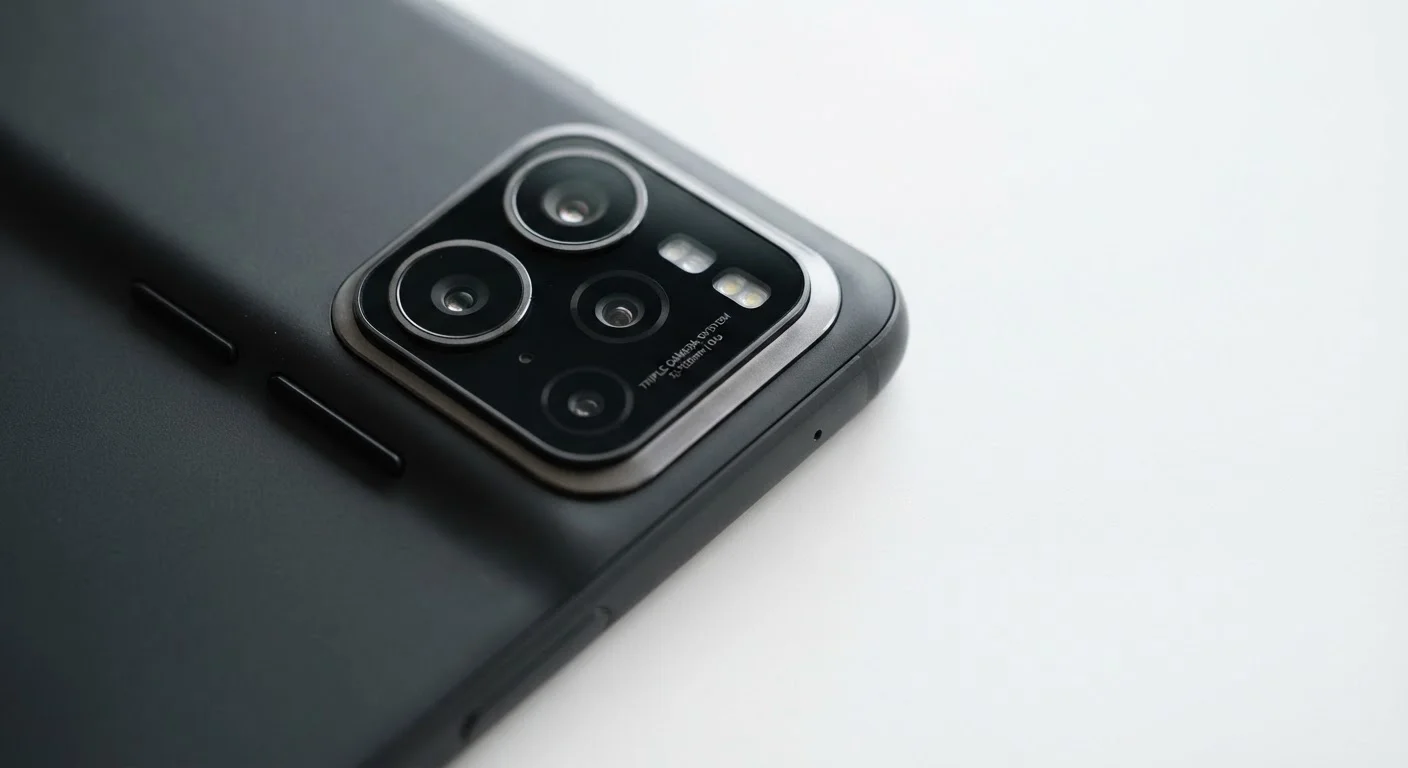
Photo: UnlockTopics.com | Unlocking Trending Content editorial
Why Camera Specs Are Worth Understanding
When you scan a smartphone's camera spec sheet, terms like f/1.8 aperture, 1/1.5" sensor, and Night Mode appear regularly — but they rarely come with explanations. Understanding what these terms actually mean helps you evaluate whether a phone will genuinely take better photos in your real-world conditions, not just in a lab.
This glossary decodes the most common mobile camera terms so you can read spec sheets with confidence. For context on how the phone's chip ties into camera performance, see what your smartphone's processor actually does.
| Lower f-number means | Wider aperture, more light intake |
| Sensor size notation | Smaller denominator = larger sensor (e.g., 1/1.3" > 1/2.5") |
| Typical smartphone megapixel range | 12MP to 200MP depending on model tier |
| Night Mode exposure duration | Fractions of a second to several seconds |
| Pixel size unit | Microns (µm) — larger is generally better in low light |
| Ultrawide FOV typical range | 110–120 degrees |
Aperture, Focal Length, and Field of View
Aperture describes the opening inside a camera lens through which light passes. On smartphones, it's expressed as an f-number (e.g., f/1.8 or f/2.4). A lower f-number means a wider opening — more light reaches the sensor, which improves low-light performance and can create a shallow depth-of-field effect. A higher f-number (f/4.0, for example) is typical of telephoto lenses and admits less light but sharpens distant subjects.
Focal length on a phone is listed in millimeters and relates to how zoomed-in the lens naturally sits. A wide-angle lens might be listed as 13mm equivalent, while a standard lens sits around 24–28mm, and a telephoto lens might be 70mm or more. These numbers are stated as full-frame equivalents so they can be compared consistently across all cameras.
Field of view (FOV) is the angle of the scene a lens captures. Wide FOV lenses capture more of a scene — useful for landscapes or group photos — while narrow FOV lenses zoom into distant subjects. Phones with ultrawide cameras often achieve FOVs above 110 degrees.
Aperture
The opening inside a lens that controls how much light reaches the sensor. Expressed as an f-number — lower values (f/1.8) mean a wider opening and more light intake.
Sensor Size
The physical dimensions of the image sensor. Larger sensors gather more light and generally produce better low-light performance and dynamic range.
Pixel Binning
A technique where multiple small sensor pixels are combined into one larger effective pixel, boosting low-light performance without permanently reducing resolution.
Night Mode
A computational feature that merges multiple exposures taken in quick succession to create a brighter, cleaner image in low-light conditions.
HDR
High Dynamic Range imaging combines frames at different exposures to preserve detail across both highlights and shadows in a single photo.
Computational Photography
The use of software algorithms to process and enhance images captured by the hardware sensor, enabling effects like portrait blur, noise reduction, and scene optimization.
Focal Length (Equivalent)
A measure of a lens's zoom level expressed in millimeters, standardized to a full-frame camera reference so different phones can be compared on the same scale.
OIS (Optical Image Stabilization)
A physical mechanism inside the lens or sensor module that compensates for hand movement, reducing blur in handheld and low-light shots.
Sensor Size, Pixel Size, and Resolution
Sensor size is one of the most impactful specifications in mobile photography. It's expressed as a fraction (e.g., 1/1.3" or 1/2.55") — and counterintuitively, a smaller denominator means a larger sensor. Larger sensors capture more light per frame, which typically translates to better dynamic range and lower digital noise, especially in dim conditions.
Pixel size, measured in microns (µm), describes how large each individual light-gathering unit on the sensor is. Larger pixels (e.g., 1.4µm vs. 0.8µm) capture more light and can produce cleaner images in challenging light. Some phones use pixel binning — merging several small pixels into one larger effective pixel — to improve low-light output while maintaining a high-resolution count for bright-light shooting.
Megapixel count refers to the total number of pixels on the sensor, in millions. More megapixels allow larger prints and more aggressive cropping, but a higher count does not automatically mean better photos. Sensor size and pixel size remain equally important factors. A 200MP sensor with tiny pixels can underperform a 50MP sensor with larger ones in everyday use.
1/1.3"
Among the largest sensors found in current flagship phones
Sensor sizes vary widely; larger formats were historically exclusive to dedicated cameras before appearing in high-end smartphones.
2.4µm
Example effective pixel size after pixel binning on some flagship sensors
Combining smaller native pixels produces larger effective pixels designed to gather significantly more light per unit.
4–8 frames
Typical number of frames merged in Night Mode capture
The exact number varies by implementation; more frames can extend capture time but improve brightness and noise reduction.
Night Mode, HDR, and Computational Photography
Night Mode is a software-driven feature that captures multiple frames over a short exposure period — sometimes a fraction of a second, sometimes several seconds — and combines them to produce a brighter, less noisy image than a single standard shot would allow. The phone's chip does the heavy lifting, which is why processor capability directly affects Night Mode speed and quality. This is explored further in our article on what your smartphone's processor actually does.
HDR (High Dynamic Range) captures multiple images at different exposure levels and blends them. This preserves detail in both bright areas (like a sky) and shadowy areas (like a shaded face) that a single exposure would lose.
Computational photography is the umbrella term for all the software processing that transforms raw sensor data into a finished image. Portrait mode blur, sky enhancement, AI scene detection, and image stabilization all fall under this category. The hardware provides raw data; the software shapes the final result. Understanding this helps explain why two phones with similar sensor specs can produce noticeably different photos.
Specs Don't Tell the Whole Story
The content on this site is for informational purposes only and is not a substitute for professional advice. Always consult a qualified professional for guidance specific to your situation.