
Fragrance in Skincare: What to Know Before You Apply

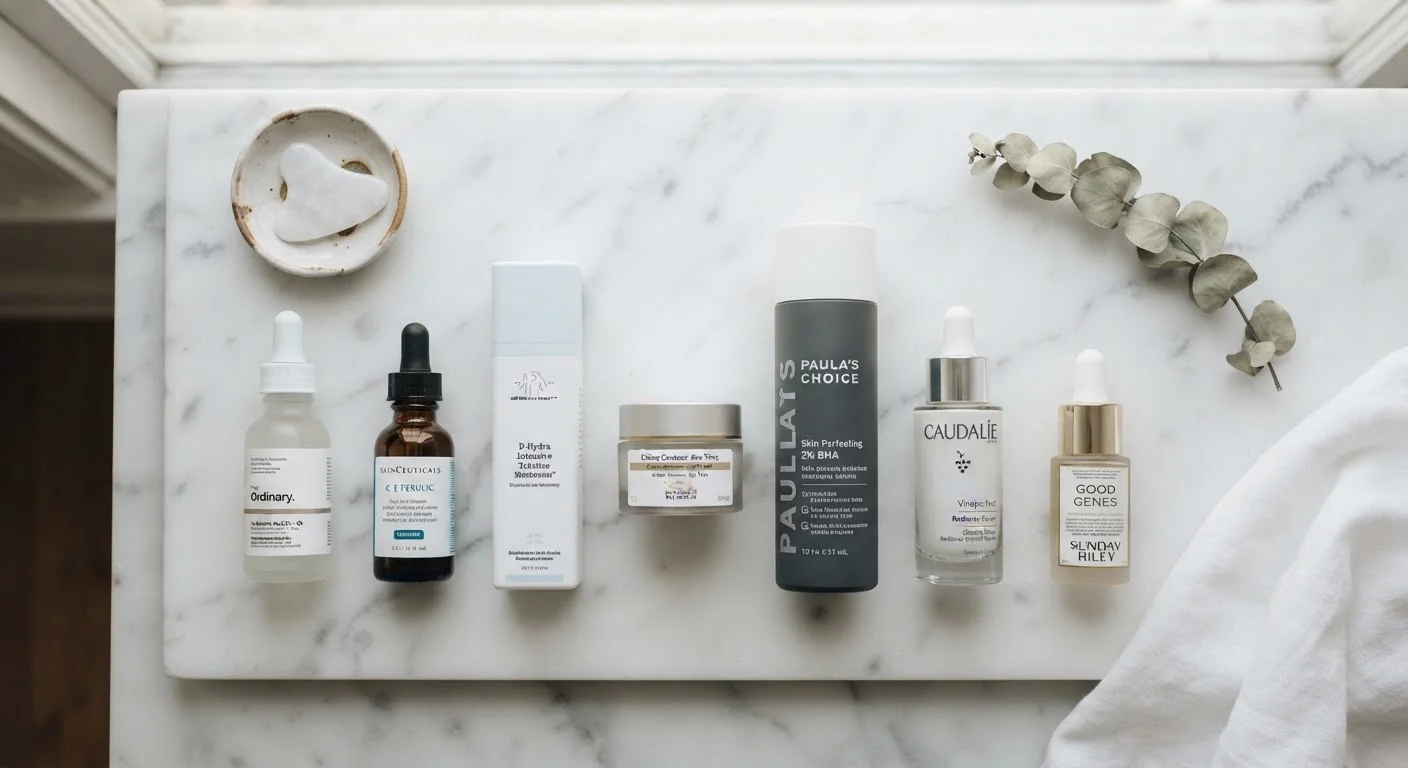
Photo: UnlockTopics.com | Unlocking Trending Content editorial
Key Takeaways
- "Fragrance" on an ingredient label can represent a blend of dozens of undisclosed chemical compounds.
- Both synthetic and natural fragrances carry potential for skin sensitization and allergic reactions.
- Fragrance-free and unscented are not interchangeable terms — the distinction matters for sensitive skin.
- Skin sensitivity to fragrance can develop over time, even in people who previously had no reaction.
- High-risk product formats include leave-on treatments applied near the eyes or on compromised skin barriers.
What "Fragrance" Actually Means on a Label
When you see "fragrance" or "parfum" on a skincare ingredient list, it does not refer to a single ingredient. Under current U.S. labeling regulations, manufacturers are permitted to list an entire blend of aromatic compounds under one umbrella term, protecting proprietary formulas. That single word can represent anywhere from a handful to hundreds of individual chemicals — some of which are well-studied, others far less so.
This matters because ingredient transparency is the foundation of making informed skincare choices. If you're trying to identify what's causing a reaction or simply want to understand what you're applying to your skin, "fragrance" gives you very little to work with. For a broader guide to decoding what's in your products, see The Ingredient Label Decoder.
Fragrance Labeling Rules Vary by Region
Natural vs. Synthetic Fragrance: A Common Misconception
A widespread assumption holds that natural or botanical fragrances are inherently safer than synthetic ones. Dermatological research does not consistently support this view. Essential oils — lavender, citrus, rose, and others — contain naturally occurring allergens such as linalool, limonene, and geraniol, all of which are recognized sensitizers by the European Scientific Committee on Consumer Safety.
Synthetic fragrances, by contrast, are often formulated with greater consistency and can sometimes be engineered to exclude known allergens. Neither category is categorically safer. What matters more is the concentration of the fragrance ingredients, where on the body the product is applied, and individual skin sensitivity.
~26
Fragrance allergens requiring EU label disclosure
The European Union requires individual disclosure of approximately 26 known fragrance allergens when present above trace concentrations — a regulatory standard not currently matched in the U.S.
1 in 10
People estimated to have fragrance sensitivity
Research published in dermatology literature estimates that roughly one in ten people experiences some degree of fragrance sensitivity, with rates higher among those with eczema or contact dermatitis.
Fragrance-Free vs. Unscented: Not the Same Thing
These two terms are frequently confused, and the difference is meaningful. Fragrance-free means no fragrance ingredients have been added to the formula. Unscented means the product has no perceptible smell — but masking agents (themselves fragrance compounds) may have been used to achieve that neutral scent. For people with sensitive or reactive skin, fragrance-free is the more reliable standard to seek out.
It's also worth noting that "hypoallergenic" is a marketing term with no standardized regulatory definition in the U.S. It does not guarantee a product is free of fragrance or allergens.
When in Doubt, Go Fragrance-Free First
Best Practices for Navigating Fragrance in Your Routine
Adopting a thoughtful approach to fragrance doesn't necessarily mean eliminating all scented products. It means being strategic about where, when, and how you use them.
Prioritize fragrance-free formulas for leave-on products, especially treatments.
Patch test any new fragranced product before applying it to your full face.
Reduce fragrance exposure around compromised or actively irritated skin.
Read the full ingredient list, not just front-of-pack claims.
Pay attention to fragrance placement in the ingredient list.
If you suspect fragrance is affecting your skin, a skincare routine audit can help you isolate the cause. And when building or rebuilding a routine, the order in which you apply products also influences how ingredients — including fragrance compounds — interact with your skin barrier.
The content on this site is for informational purposes only and is not a substitute for professional advice. Always consult a qualified professional for guidance specific to your situation.