
Why Automating Your Savings Tends to Outperform Manual Transfers

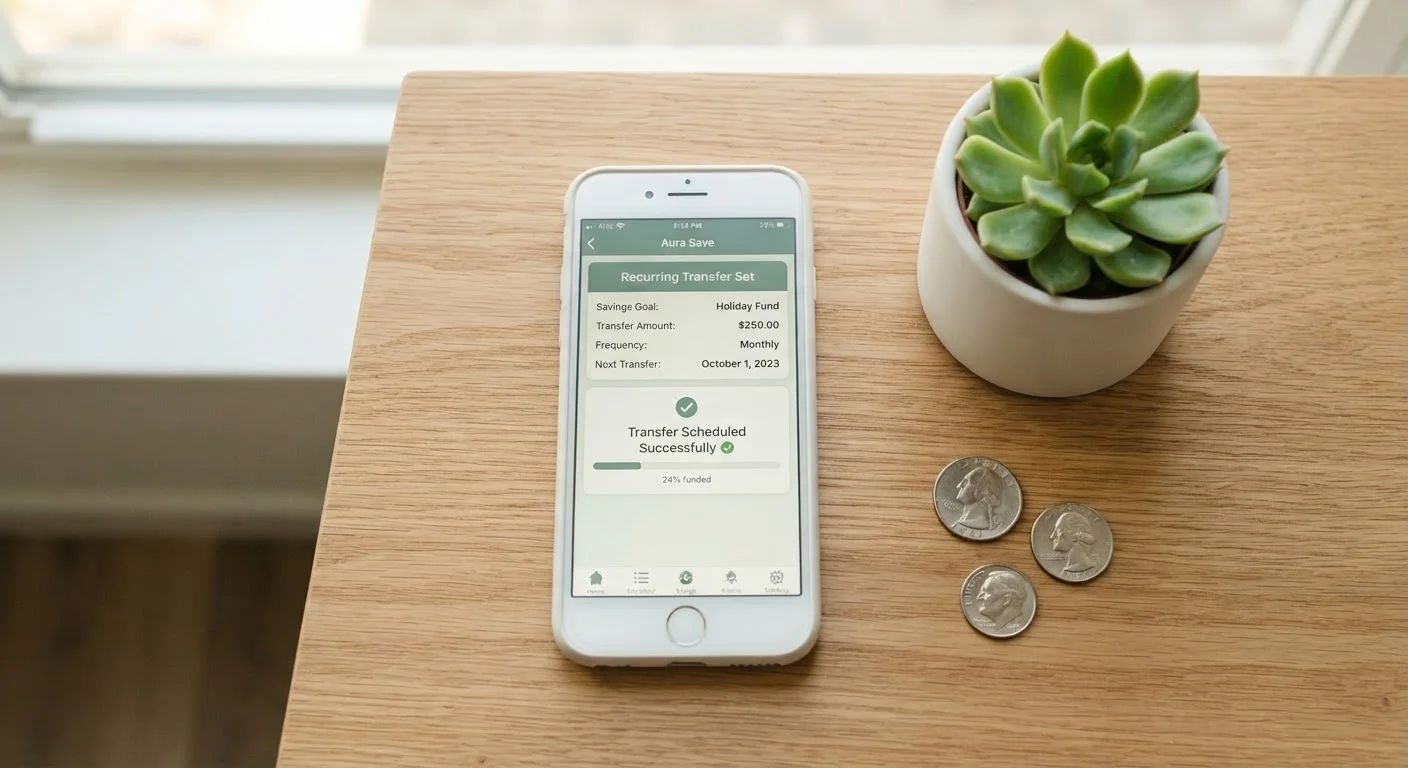
Photo: UnlockTopics.com | Unlocking Trending Content editorial
Key Takeaways
- Automation removes the need to decide whether to save each pay period, reducing the chance you'll skip it.
- Behavioral research consistently shows people spend money that sits in a checking account faster than money moved elsewhere.
- Even small automated transfers compound meaningfully over time at any income level.
- You can pause or adjust automated transfers - they are not a permanent commitment.
- Timing transfers to coincide with payday is one of the most effective structural choices you can make.
The Core Problem With Manual Transfers
Manual saving depends on a decision being made correctly, every single time. That sounds manageable - until life gets busy, an unexpected bill lands, or you simply forget. The money sits in checking, and spending finds a way to absorb it.
This is not a willpower failure. It reflects a well-documented pattern in behavioral economics: when money is visible and accessible, we treat it as available. Understanding why knowing what to do isn't always enough helps explain why even financially literate people consistently save less than they intend. Present bias - the tendency to value what we can use now over what we could have later - is simply stronger than good intentions in most circumstances.
Manual transfers also introduce what researchers call "friction": the small effort of logging in, choosing an amount, and confirming a transfer. Each step is minor, but together they create enough resistance that transfers often get deferred or skipped entirely.
Direct Deposit Splitting Is Worth Exploring
Why Automation Works: The "Pay Yourself First" Principle
Automation operationalizes a straightforward idea: move savings before you have a chance to spend the money. When a transfer fires on payday, your checking account never shows that money as available. You budget around what remains, and the gap closes naturally over time.
The behavioral shift is significant. Instead of saving what is left over - which is often nothing - you spend what is left over after saving. That reversal is the engine behind why automated savers tend to accumulate balances faster than those who intend to transfer manually.
~57%
Americans with less than $1,000 in savings
Surveys by various financial wellness organizations have repeatedly found that a majority of U.S. adults hold minimal liquid savings, underscoring how difficult manual saving proves in practice.
Pay first
Key principle behind employer retirement enrollment
Research on automatic 401(k) enrollment - notably studied by Thaler and Benartzi - found that opt-out defaults dramatically increased participation rates compared to opt-in programs, illustrating how automation reshapes saving behavior at scale.
Timing matters too. Transfers scheduled for the same day as direct deposit, or one day after, capture the money before discretionary spending begins. A savings system built around your real life can align transfer timing with your actual pay schedule, making the whole approach more durable.
Practical Considerations Before You Set It Up
Automation is a tool, not a guarantee. A few things are worth thinking through before you configure a recurring transfer:
- Start smaller than feels ambitious. An amount that is easy to sustain beats a larger amount that leads to overdrafts or constant adjustments. You can always increase it later.
- Match the transfer date to your cash flow. If your rent clears on the 1st, do not schedule your savings transfer for the 2nd. Give yourself a day or two of buffer.
- Separate the account visually. Moving savings to an account you do not check daily reduces the temptation to dip into it. Many people use a savings account at a different institution for exactly this reason.
- Revisit the amount periodically. Life changes - income rises, expenses shift, goals update. Structuring savings around time horizons can help you decide whether a single automated transfer serves all your goals or whether separate buckets make more sense.
Start With One Small Automated Transfer
If your income varies month to month, a fixed-dollar automation may not always be realistic. Savings habits that hold up across income levels covers approaches designed for irregular earners, including percentage-based rules that flex with what you bring in.
What Automation Does Not Fix
Setting up an automated transfer will not resolve a budget that simply does not have room for saving. If expenses consistently exceed income, the first step is examining where money is going - not automating a transfer that will bounce. Keeping a savings account open when expenses rise addresses this tension honestly.
Automation also will not replace the occasional review. Accounts should be checked, transfer amounts should be adjusted when life changes, and goals should be revisited at least once a year. Automation reduces the effort of saving - it does not eliminate the need to stay engaged with your finances.
Used with realistic expectations, though, automated transfers remain one of the simplest structural moves available. They work not because they require discipline, but because they make discipline less necessary. For most people, that is exactly the kind of system that sticks.
This article is for general informational and educational purposes only. It does not constitute personalised financial, investment, or tax advice. For guidance specific to your situation, consult a qualified financial professional.
Frequently Asked Questions
The content on this site is for informational purposes only and is not a substitute for professional advice. Always consult a qualified professional for guidance specific to your situation.