
Your First Look at Credit: A Beginner's Orientation

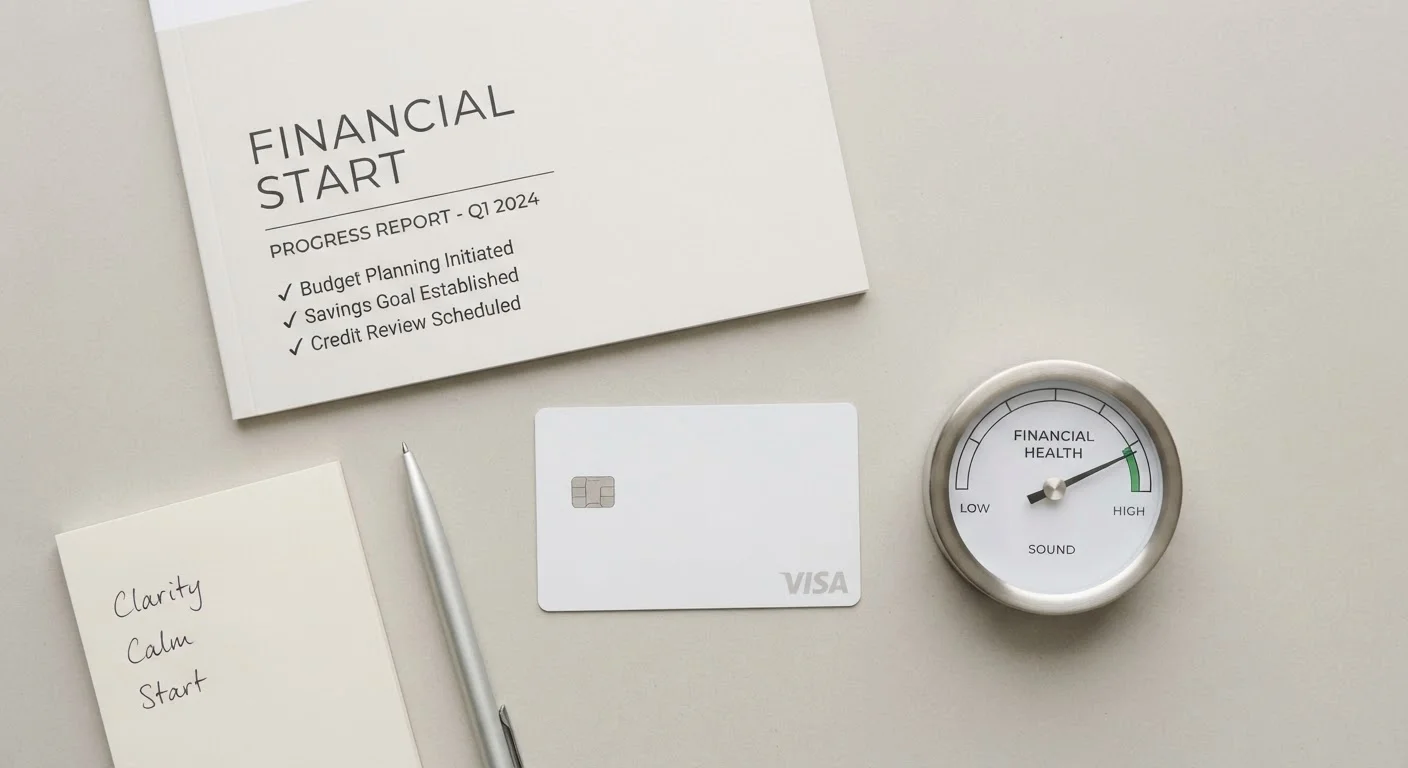
Photo: UnlockTopics.com | Unlocking Trending Content editorial
Key Takeaways
- Credit is borrowed money you agree to repay, usually with interest.
- Lenders report your borrowing behavior to credit bureaus, which compile your credit report.
- Your credit score is a three-digit number calculated from the information in that report.
- Payment history is the single largest factor in most credit score models.
- You can request a free copy of your credit report regularly to check for errors.
- Building credit responsibly takes time - there are no shortcuts, but consistent habits work.
What Credit Actually Is
At its simplest, credit is an arrangement where a lender gives you money - or buying power - now, and you agree to pay it back later, usually with interest. When a bank approves you for a credit card or a car loan, they're extending credit. You're borrowing their money under terms you both agree to.
The concept of debt follows naturally: debt is the amount you currently owe. Having debt isn't automatically bad - mortgages and student loans are forms of debt that millions of people use intentionally. What matters is whether the debt is manageable and used purposefully. For a broader look at how these two concepts fit together, see Debt, Credit, and Your Financial Life.
If you haven't set up a personal budget yet, that's worth doing alongside learning about credit. A budget tells you how much room you have to take on and repay borrowed money. Your First Personal Budget is a good place to start.
Credit
An arrangement where a lender lets you borrow money now with the agreement that you'll repay it later, typically with interest.
Interest
The cost of borrowing money, usually expressed as an annual percentage rate (APR). It's the extra amount you pay on top of what you originally borrowed.
Credit Bureau
A company that collects and stores information about how people borrow and repay money. The three major ones in the U.S. are Equifax, Experian, and TransUnion.
Credit Utilization
The percentage of your available revolving credit (like a credit card limit) that you're currently using. For example, a $500 balance on a $1,000 limit card is 50% utilization.
Hard Inquiry
A formal review of your credit report triggered when you apply for new credit. It can cause a small, temporary dip in your credit score.
Thin File
Having little to no credit history on record, which makes it difficult for lenders or scoring models to assess your creditworthiness.
Types of Credit Accounts
Not all credit works the same way. The two most common categories are revolving credit and installment credit.
- Revolving credit - like a credit card or a home equity line of credit - gives you a set limit you can borrow against repeatedly. You carry a balance month to month if you don't pay it off, and interest accrues on what remains.
- Installment credit - like a car loan, mortgage, or personal loan - gives you a fixed amount upfront. You repay it in equal monthly installments over a defined term until it's paid off.
There are also charge accounts, which require you to pay the full balance each billing cycle, and secured accounts, which are backed by a deposit you make upfront. Secured credit cards are often used by people just starting to build a credit history.
Starting with a Secured Card
Your Credit Report Explained
Every time you open an account, make a payment, or miss one, that activity gets reported to one or more of the three major consumer credit bureaus: Equifax, Experian, and TransUnion. These bureaus compile that information into a credit report - a detailed record of your borrowing history.
Your report typically includes: open and closed accounts, balances and credit limits, payment history, hard inquiries from recent applications, and any public records like bankruptcies. Under the Fair Credit Reporting Act, you're entitled to a free copy of your report from each bureau periodically through AnnualCreditReport.com.
It's worth reviewing your report for accuracy. Errors do appear - a payment marked late when it wasn't, or an account you don't recognize. Disputing inaccuracies is a right the law gives you, and correcting them can affect your score. If some of the terms in your report are unfamiliar, the Plain-English Glossary of Debt and Credit Terms breaks down the most common ones.
One Report, Three Bureaus
How a Credit Score Is Calculated
A credit score is a three-digit number - most commonly ranging from 300 to 850 - generated by running your credit report data through a scoring model. FICO and VantageScore are the two most widely used models in the U.S., and while they differ in some details, they weigh similar factors.
The general categories that influence your score:
- Payment history (~35% in FICO): Whether you pay on time is the single biggest factor. Even one missed payment can have a notable impact.
- Amounts owed / credit utilization (~30%): How much of your available revolving credit you're using. Lower utilization generally helps your score.
- Length of credit history (~15%): How long your accounts have been open. Older accounts tend to help.
- Credit mix (~10%): Having both revolving and installment accounts can be a positive signal.
- New credit (~10%): Recent applications for new credit can cause a small, temporary dip.
These percentages are approximations from FICO's public guidance and can vary based on your individual profile.
Why Your Credit History Matters
Your credit history affects more than just loan approvals. Landlords often run credit checks before renting. Some employers review credit reports for certain roles. Utility companies and insurers in some states use credit information when setting deposits or premiums. A stronger credit profile tends to open more options - and at lower costs.
None of this means credit is something to fear or avoid. It's a financial tool. Used carefully, it can help you make large purchases manageable, handle unexpected expenses, and build a track record that works in your favor. The key is understanding how it works before you rely on it.
Once you have this foundation, the next step is learning how to build and maintain credit intentionally. Building Credit Responsibly covers the habits that support a healthy profile over time.
This article is for general informational and educational purposes only and does not constitute personalized financial or legal advice. For guidance specific to your situation, consider consulting a qualified financial professional.
AnnualCreditReport.com
The federally mandated site where U.S. consumers can request free credit reports from Equifax, Experian, and TransUnion. Reviewing your reports regularly is a foundational credit habit.
Consumer Financial Protection Bureau (CFPB)
The CFPB offers free, plain-language educational resources on credit reports, scores, debt, and your rights as a borrower - without selling any products.
Frequently Asked Questions
The content on this site is for informational purposes only and is not a substitute for professional advice. Always consult a qualified professional for guidance specific to your situation.