
A Plain-English Glossary of Debt and Credit Terms

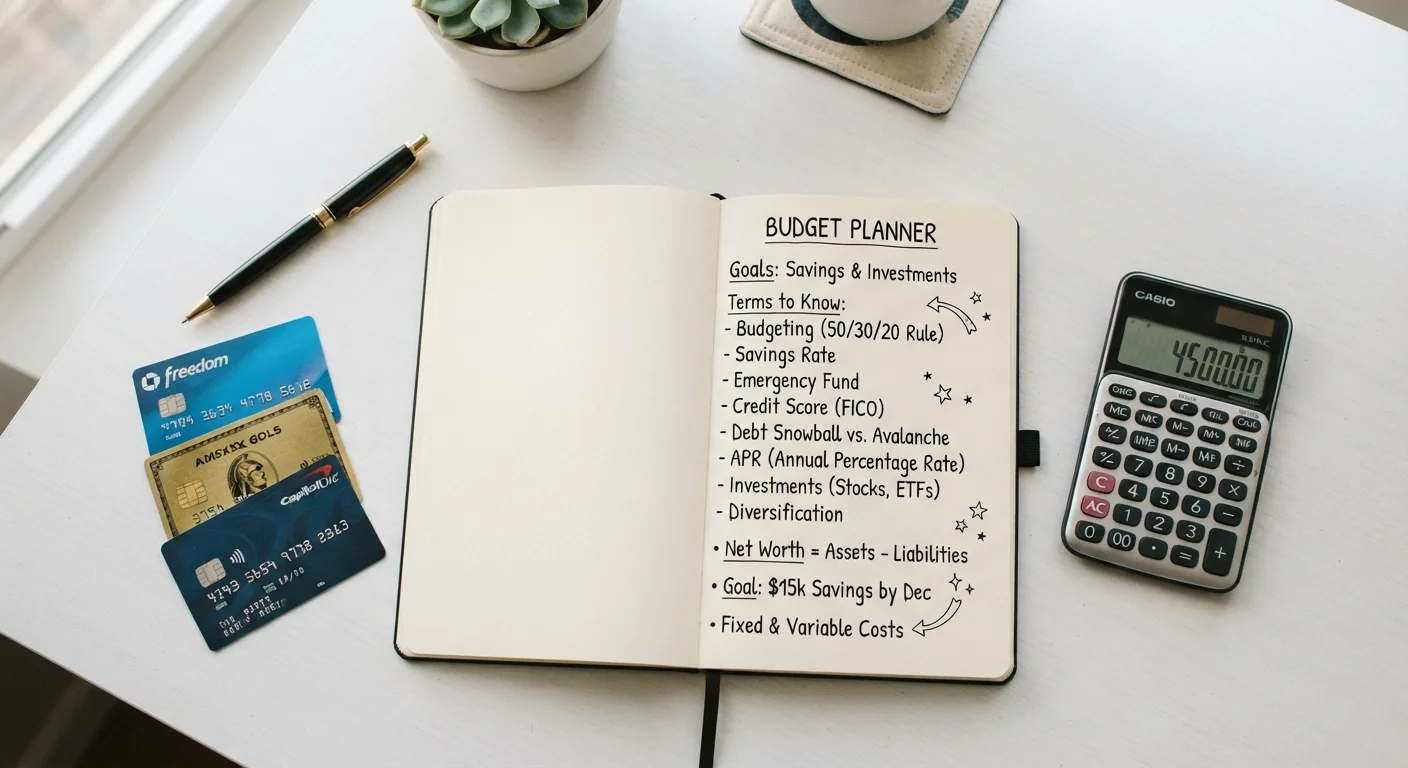
Photo: UnlockTopics.com | Unlocking Trending Content editorial
Why These Terms Matter
Credit and debt vocabulary shows up in loan offers, billing statements, credit reports, and conversations with lenders - often without explanation. When you don't know what a term means, it's easy to miss something important, agree to something you didn't intend, or feel frozen when you should be asking questions.
This glossary covers the words and phrases that come up most often. Think of it as a reference you can return to anytime a term stops you cold. If you're just getting started with credit altogether, our beginner's orientation builds the full picture from scratch.
| Credit bureaus in the U.S. | 3 (Equifax, Experian, TransUnion) (Consumer Financial Protection Bureau) |
| Typical credit score range | 300-850 (FICO and VantageScore) |
| How long late payments stay on your report | Up to 7 years (Fair Credit Reporting Act) |
| Free credit reports available per year | One per bureau via AnnualCreditReport.com (Federal law (FCRA)) |
| Charge-off report duration | Up to 7 years from first delinquency (Fair Credit Reporting Act) |
| Bankruptcy report duration (Chapter 7) | Up to 10 years (Fair Credit Reporting Act) |
Core Terms: Credit Basics
These are the building blocks - terms that define how credit works and how lenders evaluate you.
Credit Report
A detailed record of your borrowing history, compiled by credit bureaus (Equifax, Experian, and TransUnion). It lists your accounts, payment history, balances, and any negative marks like collections or bankruptcies. Lenders use it to evaluate your creditworthiness.
Credit Score
A three-digit number - typically ranging from 300 to 850 - that summarizes your creditworthiness based on your credit report. Higher scores generally make it easier to qualify for credit and secure better rates.
Revolving Credit
A type of credit with a reusable limit, like a credit card or home equity line of credit. You borrow, repay, and borrow again up to your limit. Your minimum payment often fluctuates based on your balance.
Installment Loan
A loan repaid in fixed, regular payments over a set term - such as an auto loan, mortgage, or personal loan. Unlike revolving credit, the limit does not reset once repaid.
Credit Utilization
The percentage of your available revolving credit that you're currently using. For example, a $2,000 balance on a $10,000 credit limit is 20% utilization. Lower utilization generally has a positive effect on credit scores.
Hard Inquiry
A credit check initiated when you apply for new credit, such as a loan or credit card. Hard inquiries are recorded on your credit report and can temporarily lower your score by a small amount.
Soft Inquiry
A credit check that does not affect your score. Examples include checking your own credit, pre-approval checks by lenders, or background checks by employers.
Debt-to-Income Ratio (DTI)
Your total monthly debt payments divided by your gross monthly income, expressed as a percentage. Lenders use DTI to gauge whether you can comfortably take on additional debt.
Secured Debt
Debt backed by collateral - an asset the lender can claim if you don't repay. Mortgages and auto loans are common examples; the home or car serves as the collateral.
Unsecured Debt
Debt not tied to any collateral. Credit cards and most personal loans are unsecured. Because lenders take on more risk, interest rates on unsecured debt are often higher.
Co-signer
A person who agrees to share legal responsibility for a loan with the primary borrower. If the borrower doesn't pay, the co-signer is obligated to. The loan appears on both parties' credit reports.
Derogatory Mark
Any negative item on a credit report - such as a late payment, collection account, charge-off, or bankruptcy - that can lower your credit score and remain visible to lenders for years.
For a broader look at how these concepts interact across your financial life, see the complete guide to debt, credit, and your financial life.
Terms Related to Costs and Rates
These terms describe what borrowing actually costs you - not just the interest rate, but the full picture.
- APR (Annual Percentage Rate)
- The yearly cost of borrowing expressed as a percentage. It includes the interest rate plus most fees, making it a more complete measure of cost than the interest rate alone. Two loans with the same interest rate can have very different APRs depending on their fees.
- Variable Rate
- An interest rate that can change over time, usually tied to an index like the federal funds rate. Your monthly payment may rise or fall as rates shift.
- Fixed Rate
- An interest rate that stays the same for the life of the loan. Predictable monthly payments make budgeting easier.
- Minimum Payment
- The smallest amount a lender requires you to pay each billing cycle to keep the account in good standing. Paying only the minimum on revolving debt typically means paying significantly more in interest over time.
- Grace Period
- A window - often 21 to 25 days on credit cards - during which you can pay your full balance without being charged interest on new purchases. Not all credit products include one.
If you find savings terminology equally useful to keep nearby, our savings terms glossary covers APY, compound interest, and liquidity in the same plain-English style.
Terms Related to Account Problems
These are the terms no one wants to see - but understanding them helps you recognize warning signs early and know your options.
- Late Payment
- A payment made after the due date. Payments 30 or more days late are typically reported to credit bureaus and can lower your credit score.
- Default
- When a borrower fails to meet the legal obligations of a loan - usually by missing multiple payments. The definition varies by lender and loan type, but default typically triggers serious consequences: collections, legal action, or repossession.
- Charge-Off
- When a creditor decides a debt is unlikely to be collected and removes it from their books as a loss. This does not erase the debt - you still owe it, and it can be sold to a collections agency. A charge-off is a significant negative mark on a credit report.
- Collections
- The process of pursuing unpaid debt, either by the original creditor or a third-party collections agency that purchased the debt. Accounts in collections appear on your credit report and can remain for up to seven years.
- Bankruptcy
- A legal process that allows individuals or businesses to seek relief from debts they cannot repay. There are different types; each has distinct eligibility rules, long-term credit consequences, and legal implications. Consulting a qualified attorney is strongly recommended before pursuing this option.
Your Credit Report Is Free to Check
This article is for general informational and educational purposes only and does not constitute financial, legal, or credit advice. For guidance specific to your situation, consult a licensed financial adviser or credit counselor.
The content on this site is for informational purposes only and is not a substitute for professional advice. Always consult a qualified professional for guidance specific to your situation.