
When Buying in Bulk Actually Saves You Money (and When It Doesn't)

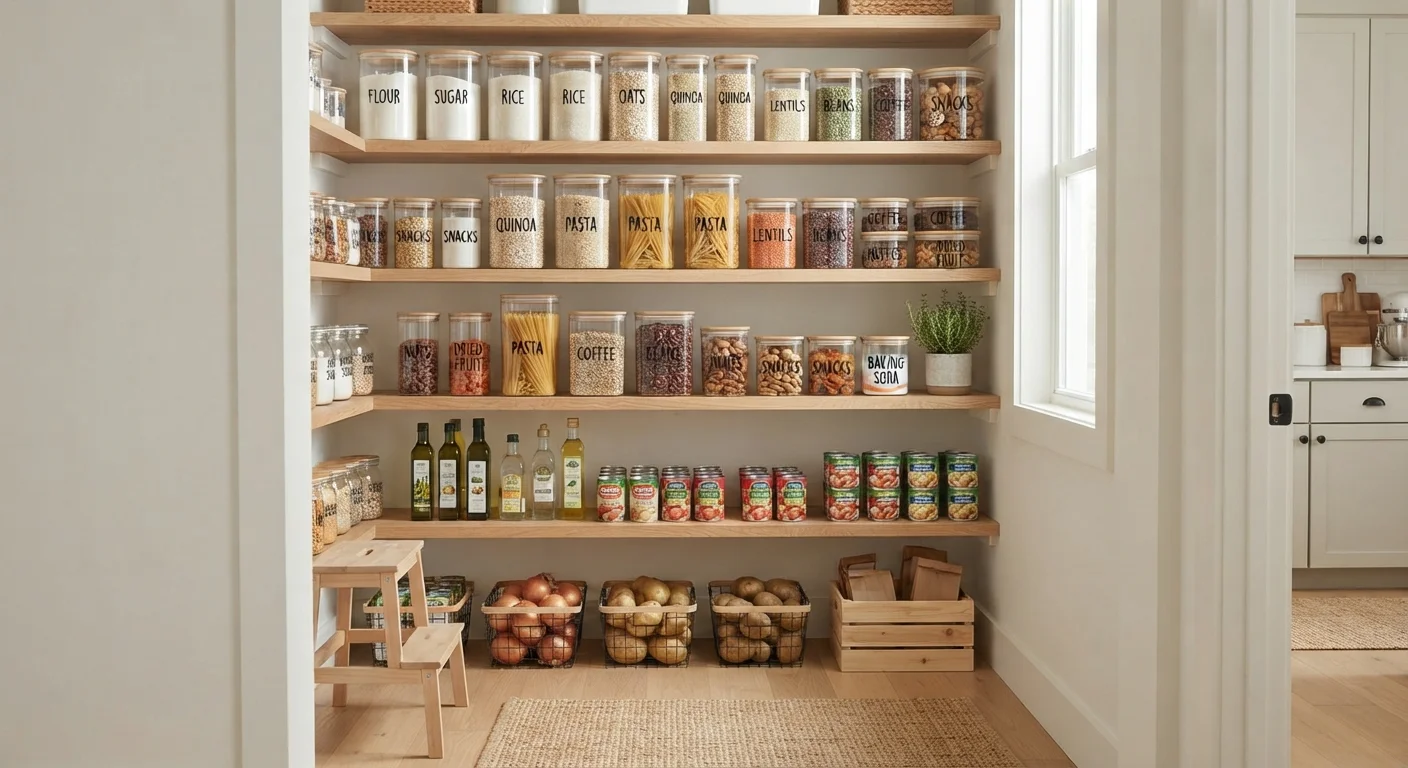
Photo: UnlockTopics.com | Unlocking Trending Content editorial
Key Takeaways
- Bulk buying saves money only when you'll use the product before it expires or degrades.
- Storage space and upfront cash outlay are real costs that offset per-unit savings.
- Non-perishables with long shelf lives are the strongest candidates for bulk purchasing.
- Buying more of something you only partially like rarely leads to savings.
- True cost-per-use comparison requires accounting for spoilage, storage, and opportunity cost.
The Core Logic of Bulk Buying
Bulk purchasing is built on a straightforward premise: buy more units at once, pay less per unit. For households with predictable consumption habits and adequate storage, this can genuinely reduce annual spending on everyday goods. But the strategy breaks down quickly when three conditions aren't met: you'll use the full quantity, you'll use it before quality declines, and the upfront cost doesn't create cash-flow problems elsewhere.
Understanding those three conditions is more useful than any rule of thumb about which products to buy in bulk. The evaluation is specific to your household - your usage rate, your storage capacity, your spending flexibility. This is the lens worth applying to every large-format purchase you consider.
For a broader framework on managing home spending across categories, building a household buying strategy covers the principles that make individual decisions like this easier to get right consistently.
Myth
Buying in bulk always saves you money compared to buying single units.
Fact
Bulk buying only saves money if you use the entire quantity before it expires, spoils, or becomes obsolete.
The per-unit price on a bulk package is almost always lower - that part is usually true. But the actual savings calculation is more complex. If half a bulk purchase of fresh produce spoils before you use it, the effective cost per usable unit climbs well above what you'd pay buying smaller quantities more frequently. The same applies to products with expiry dates, items you eventually tire of, or anything that degrades in quality over time (cooking oils, batteries, certain cleaning sprays). Real savings require full utilization, not just a favorable unit price on the shelf tag.
Myth
Warehouse club membership fees are easily offset by the savings on bulk goods.
Fact
Membership fees only pay for themselves if your actual purchasing habits generate enough consistent savings to exceed the annual cost.
Annual membership fees for warehouse clubs typically range from $65 to over $120. To recoup that cost, your bulk purchases need to generate a margin of savings beyond what you'd spend at a regular retailer. For households that consistently buy large quantities of staples - paper goods, cleaning supplies, cooking oils - the math often works out. For households that visit infrequently or end up buying oversized quantities they don't finish, the membership fee represents an added cost rather than a gateway to savings. Audit your actual purchase patterns for a year before renewing automatically.
Myth
If you have storage space, buying more is always the smarter move.
Fact
Storage space has a real cost in square footage, organization effort, and the risk of accumulating products you don't use.
Available storage is necessary for bulk buying to work, but its existence alone doesn't make bulk buying logical. Space tied up with excess inventory of one product can't be used for things you genuinely need. There's also a behavioral cost: large stockpiles can encourage over-consumption of certain items and make it harder to track what you actually have. The goal isn't to maximize how much you store - it's to hold a practical buffer of items you'll definitely use at a cadence that justifies the bulk purchase.
Myth
Bulk buying is only worthwhile for food and household consumables.
Fact
Non-consumable household goods like batteries, light bulbs, trash bags, and cleaning supplies can offer strong bulk value if chosen correctly.
While food is the most commonly discussed bulk category, non-perishable household goods often represent an even cleaner bulk-buying opportunity. They don't spoil, usage rates are predictable, and quality doesn't degrade meaningfully over time. Batteries, trash bags, laundry detergent (in stable formats like pods or powder), and paper goods are frequently cited examples of items where per-unit savings from larger packages translate reliably into real savings. The key is choosing products you already know you like and will use consistently - bulk isn't the time to trial something new. See how to evaluate product quality before committing to larger quantities.
Myth
The bigger the package, the better the deal.
Fact
Larger packages sometimes carry a price premium over mid-size options, or comparable per-unit pricing to regular retail.
It's a reasonable assumption that bigger always means cheaper per unit, but that's not universally true. Retailers occasionally price jumbo sizes at parity or even slightly above mid-range sizes, relying on the assumption that shoppers won't do the math. Some specialty or premium bulk items carry a markup relative to standard retail alternatives. Always calculate the actual cost per unit - weight, count, or fluid ounce - before assuming a large-format product is the better financial choice. A simple division on your phone before checkout is enough.
Where Bulk Buying Tends to Work - and Where It Doesn't
The clearest wins in bulk buying come from non-perishable, predictably consumed products: paper towels, toilet paper, dish soap, laundry detergent, trash bags, and shelf-stable pantry staples like dried beans, rice, or canned goods. These items have long shelf lives, stable quality over time, and usage rates that are easy to estimate. You're not guessing whether you'll finish them.
The categories where bulk buying most often backfires include fresh produce and proteins (obvious spoilage risk), perishable dairy, specialty ingredients you use infrequently, and any product you haven't fully tested at regular size first. Buying a warehouse-size bottle of a dish soap you've never used before is a gamble - if you dislike it, you're committed to weeks of using something you don't want, or simply wasting it.
~30%
Household food waste as share of purchases
U.S. Department of Agriculture estimates suggest roughly 30-40% of the food supply is wasted, with household-level waste a significant contributor - a key factor in bulk food decisions.
2-3x
Typical bulk size multiplier over standard
Bulk or warehouse formats commonly contain two to three times the quantity of a standard retail package, requiring honest assessment of whether your household will use that volume.
Upfront cost is also worth considering carefully. Bulk purchases can require spending $30-$60 at once on a single item category, which isn't a problem if your cash flow supports it - but it can create short-term strain if that purchase crowds out other necessary spending. Strategies for managing tight monthly budgets can help frame whether bulk outlay makes sense at a given point in time.
One additional pattern worth recognizing: bulk buying at a discount can sometimes mirror the same psychological pressure as seasonal sales. If you're loading up on something primarily because the quantity feels like an opportunity rather than because you need it, that's worth a pause. The pitfalls of reactive purchasing apply here too, even in a grocery aisle.
Calculate True Cost, Not Just Unit Price
The content on this site is for informational purposes only and is not a substitute for professional advice. Always consult a qualified professional for guidance specific to your situation.