
Organization Myths That Are Quietly Making Your Home Messier

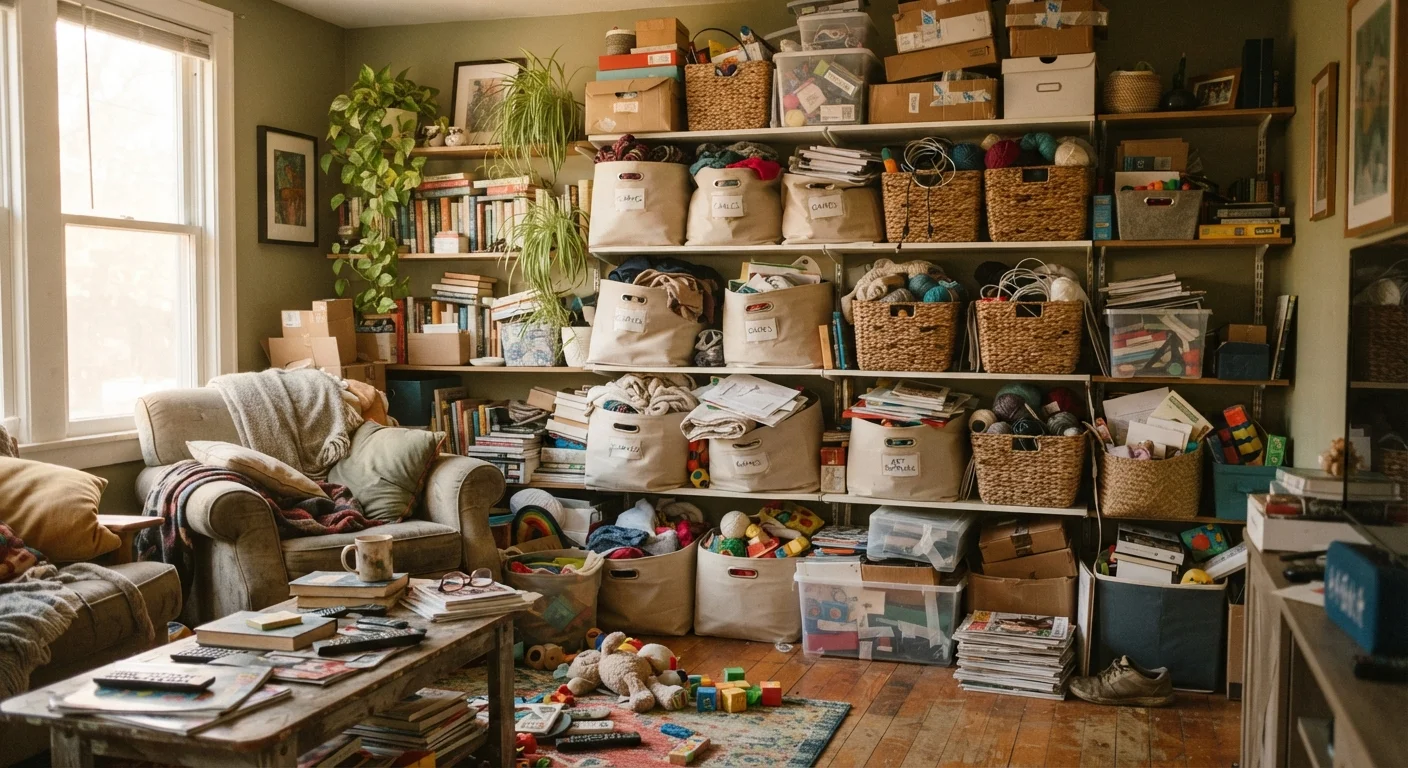
Photo: UnlockTopics.com | Unlocking Trending Content editorial
Key Takeaways
- Buying more storage containers before decluttering usually creates more clutter, not less.
- A perfectly tidy home doesn't require daily marathon sessions - small consistent habits outperform occasional overhauls.
- Visible items are often easier to maintain than those hidden away in opaque bins or deep drawers.
- Organization systems only stick when they match how you actually live, not an idealized version of your routine.
- Decluttering and organizing are two separate steps - skipping the first one undermines the second.
Why Popular Organizing Advice Often Backfires
Home organization content is everywhere - and much of it is confidently, quietly wrong. The advice sounds logical on the surface: buy matching bins, clear the counters, do a big weekend clean. But for many households, these strategies produce a short-lived tidy spell followed by a faster return to chaos than before.
The problem isn't effort. It's that several widely repeated organizing beliefs are built on faulty assumptions about how clutter actually forms and how people realistically behave in their homes. Understanding the core concepts behind organizing is a useful starting point - but debunking the myths that undercut those concepts matters just as much.
Below are the most common misconceptions, corrected with what actually works in real living spaces.
Myth
Buying more storage containers will finally get my home organized.
Fact
Adding storage to unedited belongings almost always increases clutter density rather than reducing it.
Storage containers feel productive to buy - they signal intent. But a bin filled with things you don't need is just concealed clutter. The organizing sequence matters: declutter first, then contain what remains. If you skip the editing step, you end up with more items, more containers, and a home that's harder to navigate than before. A first-principles approach to organizing always treats removal as the prerequisite to storage.
Myth
Everything should be put away out of sight for a home to feel tidy.
Fact
Hiding things behind closed doors or in opaque bins often makes systems harder to use and faster to abandon.
Out-of-sight storage works well for items used infrequently. But for everyday objects - keys, charging cables, a frequently used cookbook - forcing them into hidden storage creates friction that gradually erodes the system. When retrieval is inconvenient, things get set down on surfaces instead of returned to their place. Open, visible storage at point-of-use is often more sustainable for high-turnover items. The goal is a system you'll actually use, not one that photographs well.
Myth
A truly tidy home requires at least an hour of cleaning or organizing every day.
Fact
Short, consistent resets of five to fifteen minutes are more effective than infrequent marathon tidying sessions.
The perception that organization demands large time blocks discourages people from starting at all. In practice, clutter accumulates in predictable locations - entry surfaces, kitchen counters, the edge of the sofa. Addressing these spots in brief daily resets prevents accumulation from reaching the overwhelming threshold. The psychological weight of visible clutter grows non-linearly: a small pile feels manageable; a large one triggers avoidance. Catching it early is less work overall.
Myth
Once you organize a space properly, it will stay that way.
Fact
Any organizing system degrades over time unless it includes a simple maintenance habit built into your routine.
This myth is one of the most discouraging when it fails. People invest a weekend in a thorough reorganization and expect the result to be permanent. But households are dynamic: new items arrive, routines shift, life circumstances change. A system that worked perfectly in January may be misaligned by April. Understanding what a 'system' actually means includes building in regular, lightweight reviews - not waiting until collapse forces a full redo.
Myth
Decluttering and organizing are basically the same thing.
Fact
Decluttering (reducing what you own) and organizing (arranging what remains) are distinct steps that must happen in the right order.
Conflating these two processes is one of the most common reasons organizing efforts stall. Organizing an unedited collection of belongings is like filing papers without checking if they're still relevant - the system looks structured but contains noise. Effective decluttering asks whether each item earns its space in your home. Organizing then creates a logical, accessible home for what passes that test. Doing it in reverse - organizing first, then trying to declutter around a system - is substantially harder and rarely sticks.
Building Habits That Actually Hold
Once you've cleared the myths, the path forward looks different. Organization isn't a project you finish - it's a set of low-friction decisions embedded into daily life. The goal is making the tidy choice the easy choice, not the virtuous one.
80%
Of clutter linked to disorganization, not lack of space
According to the National Association of Professional Organizers (NAPO), the majority of household clutter stems from unclear systems and decision fatigue rather than insufficient storage space.
40%
Of housework time spent looking for misplaced items
Research cited by organizing professionals suggests a significant portion of household management time goes toward locating items that lack a consistent home.
If your home keeps unraveling despite good intentions, there's likely a structural reason rather than a willpower gap. Understanding why tidiness collapses is often more useful than trying harder with the same approach. And if you share your space, aligning on standards with the people you live with is its own challenge worth addressing directly.
The clearest takeaway: organize for your actual behavior, not your aspirational behavior. A system that works 80% of the time, every day, beats a perfect system that works for two weeks twice a year. Start with one space, strip it back, and build only the structure that friction in that space genuinely requires.
Organize for Your Real Behavior, Not Your Ideal
The content on this site is for informational purposes only and is not a substitute for professional advice. Always consult a qualified professional for guidance specific to your situation.