
Synthetic vs Conventional Oil: What Everyday Drivers Actually Need to Know

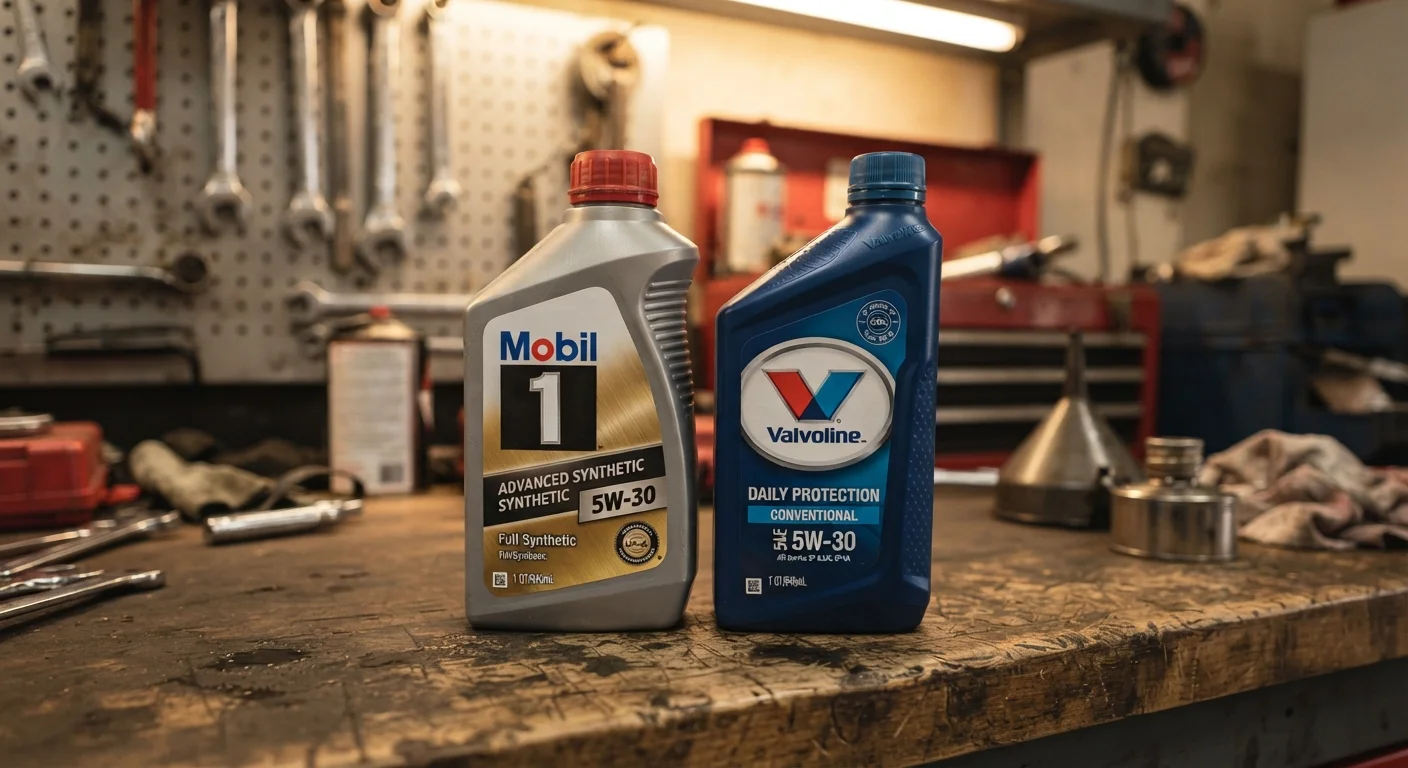
Photo: UnlockTopics.com | Unlocking Trending Content editorial
Key Takeaways
- Synthetic oil offers superior protection at high and low temperatures compared to conventional oil.
- Most modern vehicles are factory-filled with synthetic oil and may specifically require it.
- Conventional oil costs less upfront but typically requires more frequent changes.
- Your owner's manual is the definitive guide - not general advice or marketing claims.
- Switching between synthetic and conventional is generally safe but check your manual first.
How These Two Oils Are Actually Made
The core difference between synthetic and conventional motor oil isn't just marketing - it's chemistry. Conventional oil is refined directly from crude petroleum. During refining, impurities are removed, but the resulting molecules remain irregular in shape and size, which limits how uniformly the oil performs under pressure and heat.
Synthetic oil, by contrast, is chemically engineered. Manufacturers build the base oil molecules from scratch - or heavily restructure petroleum-derived molecules - so the final product is far more uniform, pure, and predictable. That molecular consistency is what gives synthetic oil its performance advantages.
There's also a middle category: synthetic-blend oil, which mixes conventional base stock with synthetic. Blends sit between the two in both price and performance, and they're a reasonable option for certain engine types and driving patterns.
For a deeper look at how viscosity grades interact with oil type, see our guide to engine oil grades and intervals.
Head-to-Head: Where Each Oil Wins
Neither oil type is universally superior - the right choice depends on your specific vehicle, climate, and driving habits. Here's how they compare across the criteria that matter most to everyday drivers.
| Criterion | Synthetic Oil | Conventional Oil |
|---|---|---|
| Base composition | Engineered or restructured molecules | Refined crude petroleum |
| Cold-weather performance | Flows faster at low temps | Thickens more in cold |
| Heat resistance | Breaks down more slowly | Degrades faster under sustained heat |
| Typical change interval | 7,500-10,000+ miles (varies by make) | 3,000-5,000 miles |
| Cost per quart | Higher upfront | Lower upfront |
| Required for turbocharged engines | Usually yes | Typically not suitable |
| Availability | Widely available | Universally available |
One area where synthetic stands out clearly is cold-weather startup protection. Because conventional oil contains more irregular molecules, it thickens more at low temperatures, which slows initial flow to engine components. Synthetic remains more fluid, reducing the critical dry-start window where most engine wear actually occurs.
At the other extreme, synthetic resists oxidation and thermal breakdown longer in high-heat conditions - which is why turbocharged engines, which run significantly hotter than naturally aspirated ones, almost universally require it. Learn how different driving styles put varying heat loads on your engine in our piece on highway vs city driving and engine wear.
~80%
New US cars shipped with synthetic oil
Industry estimates suggest the large majority of new vehicles sold in the US are factory-filled with full synthetic oil, reflecting how broadly manufacturers have adopted it.
10,000 mi
Common synthetic change interval
Many manufacturers specify synthetic oil change intervals of 7,500 to 10,000 miles or more, compared to 3,000-5,000 miles for conventional - though always defer to your owner's manual.
What Your Owner's Manual Is Actually Telling You
The single most reliable source for oil guidance isn't a mechanic's opinion, a shop's upsell, or general internet advice - it's your vehicle's owner's manual. Manufacturers specify oil type and viscosity grade based on how the engine was designed and tested. That specification is binding for warranty purposes and optimized for real-world performance.
If your manual says "full synthetic recommended," that's a strong signal the engine was engineered expecting it. If it says "synthetic required," using conventional may void warranty coverage on engine components. Many turbocharged, high-compression, or high-performance engines fall into the required category.
Conventional oil is still the appropriate choice for vehicles whose manufacturers specify it - typically older models or certain light-duty engines. Using synthetic in these cases won't damage the engine, but it's unnecessary spending.
Can You Switch Between Oil Types?
A related misconception is the universal 3,000-mile oil change rule. That advice is outdated for most modern vehicles. Synthetic oil, in particular, is commonly rated for 7,500 to 10,000 miles or more between changes, depending on manufacturer guidance. Our article on car maintenance myths that waste money breaks down why that old rule persists - and what current evidence actually supports.
The content on this site is for informational purposes only and is not a substitute for professional advice. Always consult a qualified professional for guidance specific to your situation.