
Why Your Car Insurance Premium Is Higher Than Your Neighbour's

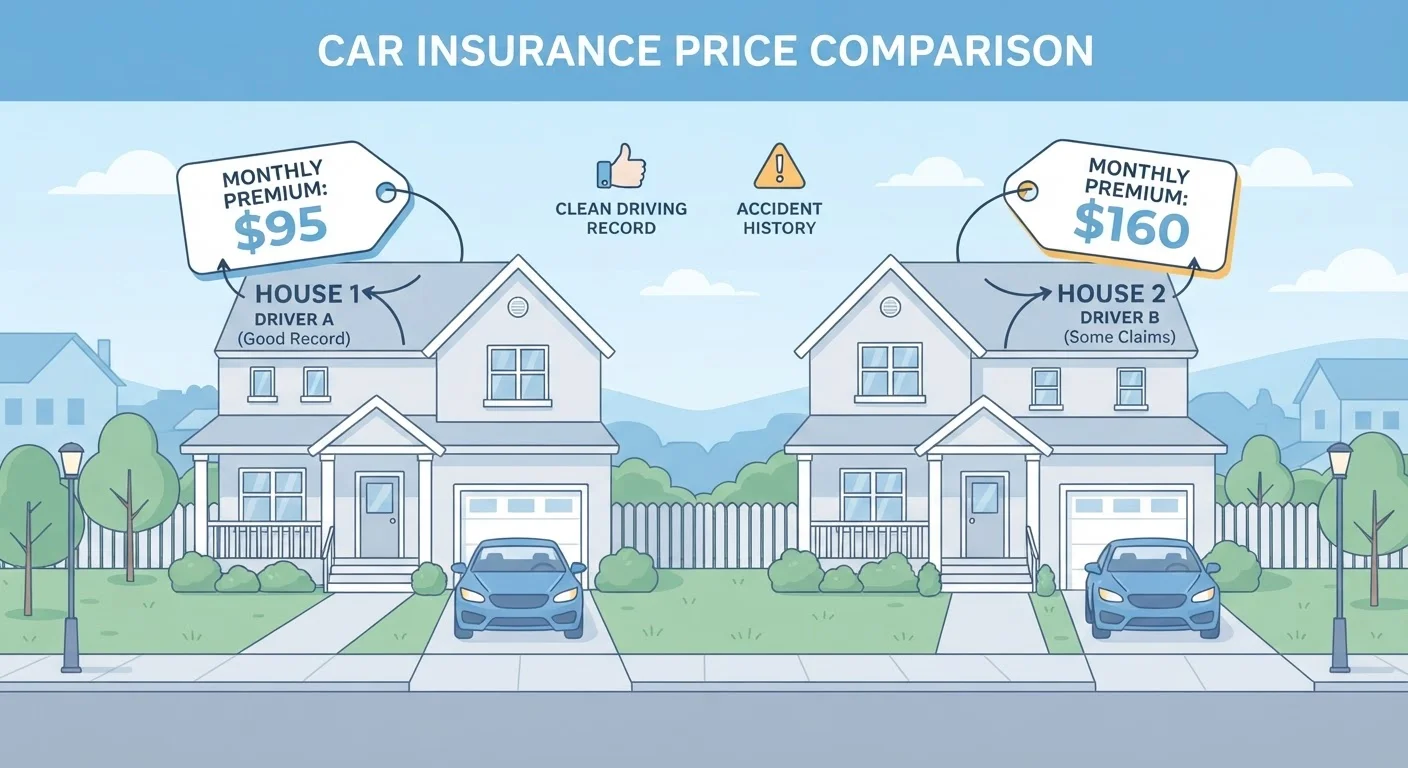
Photo: UnlockTopics.com | Unlocking Trending Content editorial
Key Takeaways
- Premiums are personalized risk assessments - no two drivers are priced identically.
- Your driving record, location, vehicle type, and coverage choices all influence your rate.
- Credit history is a legal rating factor in most U.S. states, though some have banned its use.
- You can influence several rating factors over time, such as maintaining a clean driving record.
- Shopping across multiple insurers is the most reliable way to find a competitive rate for your profile.
Premiums Are Personal - Not Random
If your neighbour pays less for car insurance than you do, it doesn't mean they found a secret deal. It means an insurer's rating model assessed their risk profile differently from yours. Auto insurance premiums are not a fixed price - they are an individualized calculation based on how likely a given driver is to generate a claim, and how costly that claim is likely to be.
Understanding the logic behind that calculation puts you in a much stronger position - whether you're renewing a policy, shopping for a new one, or just trying to make sense of your current bill. For a broader look at how these numbers interact, see how deductibles, limits, and premiums shape your policy.
3-5 years
Typical insurer look-back period for driving record
Most U.S. insurers review the prior three to five years of driving history when calculating your rate at renewal.
~20-50%
Typical premium increase after an at-fault accident
Industry analyses generally find that an at-fault accident raises premiums by roughly 20-50%, though the exact figure varies by insurer and state.
4 states
States banning credit-based insurance scoring
California, Hawaii, Massachusetts, and Michigan prohibit or significantly restrict the use of credit scores in auto insurance pricing.
The Key Factors Insurers Use to Rate You
Insurers rely on a combination of factors - sometimes called rating factors - to arrive at your premium. These fall into a few broad categories:
- Driving record: At-fault accidents, moving violations, and DUI convictions signal elevated risk and raise premiums materially. A clean record, maintained over several years, is one of the most effective ways to hold rates down.
- Age and experience: Younger drivers, especially those under 25, statistically have higher accident rates. Rates generally decrease through a driver's 30s and 40s, then may rise again for older drivers depending on the insurer.
- Location: Your garaging address matters. Insurers analyze claim frequency, vehicle theft rates, and traffic patterns at the ZIP code level. Urban drivers typically pay more than those in rural areas.
- Vehicle: The make, model, trim, age, and safety ratings of your car all affect pricing. A vehicle with high repair costs, a poor crash-test record, or a high theft rate will cost more to insure.
- Credit-based insurance score: In most U.S. states, insurers can use a version of your credit history as a rating factor. Research has shown a correlation between credit behavior and claim frequency - though this practice is banned or restricted in California, Hawaii, Massachusetts, and Michigan.
- Annual mileage: The more miles you drive, the more exposure you have to accidents. Low-mileage drivers may qualify for reduced rates in some programs.
- Coverage choices: Higher liability limits, lower deductibles, and add-on coverages (like comprehensive or rental reimbursement) all increase the premium you pay.
To understand how insurers weigh these factors statistically, this breakdown of the actuarial logic behind auto insurance pricing is worth reading.
Ask About Discounts That Match Your Profile
What You Can - and Can't - Control
Some rating factors are fixed: you can't change your age, and you can't retroactively erase a past at-fault accident. But several factors are within your influence over time.
Maintaining a clean driving record is the single most impactful long-term strategy. Most insurers look back three to five years, so violations eventually age off your record. Improving your credit score - by paying bills on time and keeping balances low - can also shift your insurance score favorably over months or years.
Choosing a vehicle with strong safety ratings and modest repair costs before you buy is a decision point many drivers overlook. And adjusting your coverage structure - such as raising your deductible - can lower your premium immediately, though it shifts more financial risk back to you in the event of a claim.
Raising Your Deductible Has a Trade-Off
If you're a newer driver trying to make sense of all of this from the start, our guide to car insurance for first-time drivers covers the essentials clearly.
It's also worth challenging assumptions you may have about what raises or lowers rates - many common beliefs are simply wrong. Auto insurance myths that could leave you underprotected is a useful corrective.
“Insurance pricing is not about punishing individual drivers - it's about placing them accurately within a population of risk. The closer that placement is to reality, the more stable the system is for everyone.”
— Insurance Information Institute, U.S. insurance industry research and communications organization
Frequently Asked Questions
The content on this site is for informational purposes only and is not a substitute for professional advice. Always consult a qualified professional for guidance specific to your situation.