
Comprehensive vs. Collision Coverage: When Each One Actually Applies

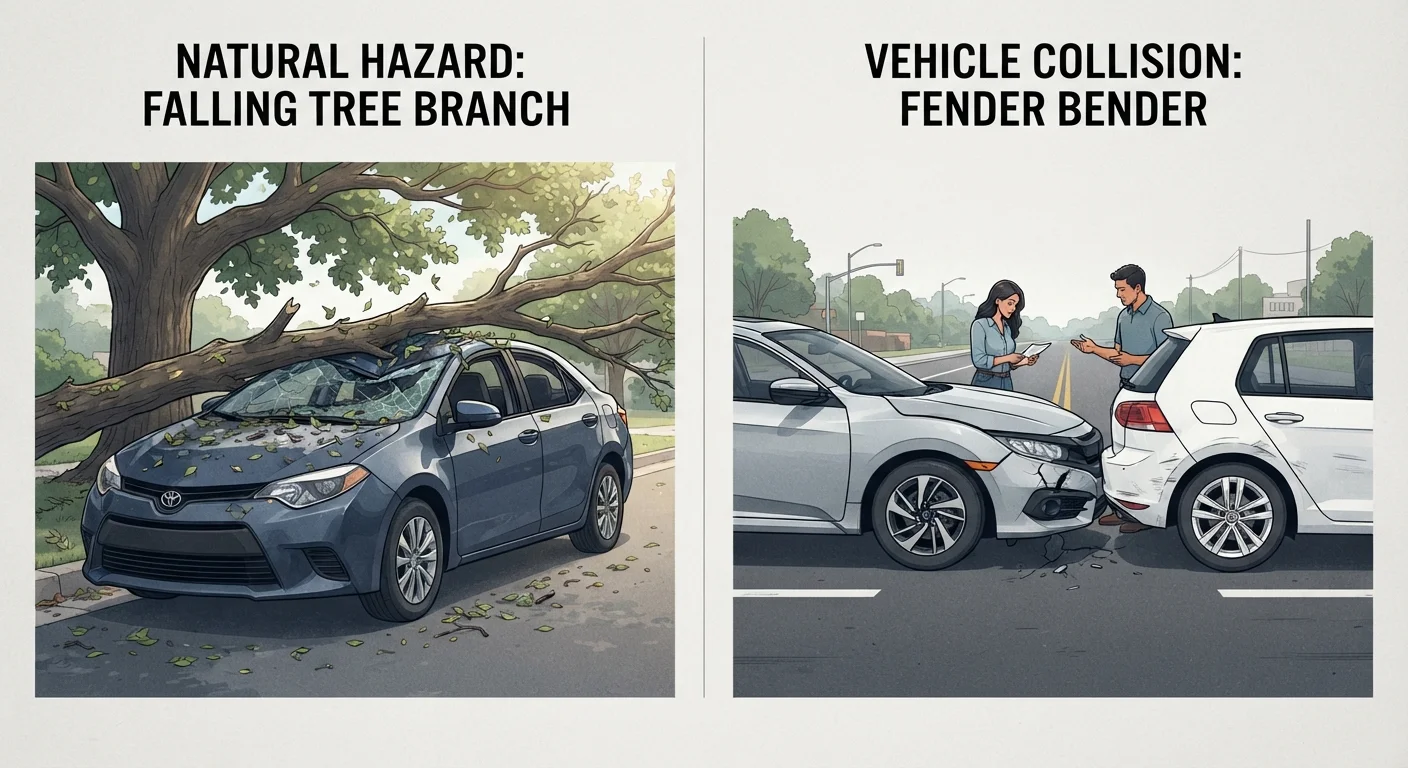
Photo: UnlockTopics.com | Unlocking Trending Content editorial
Key Takeaways
- Comprehensive covers non-collision damage: theft, weather, animals, and falling objects.
- Collision covers damage from your vehicle hitting another car, object, or rolling over.
- Both coverages are subject to a deductible you choose when setting up your policy.
- Lenders typically require both if you're financing or leasing a vehicle.
- Neither coverage pays for other drivers' injuries or property damage - that's liability.
- Carrying both together is what most people mean when they say 'full coverage.'
What Each Coverage Actually Does
Despite being bundled together in most policy discussions, comprehensive and collision coverage respond to entirely different triggering events. Understanding that distinction is the starting point for making sense of your policy. For a broader look at all the terms you'll encounter, see our plain-language auto insurance guide.
Comprehensive coverage pays for physical damage to your vehicle caused by events that are generally outside your control as a driver. Common examples include theft, vandalism, a deer strike, hail damage, flooding, fire, or a tree branch falling on your parked car. The defining characteristic: no collision with another vehicle or stationary object is involved.
Collision coverage pays for damage to your vehicle when it makes physical contact with something - another car, a guardrail, a telephone pole, or even when the vehicle rolls over. It applies whether or not you were at fault. If the other driver caused the accident and is uninsured or underinsured, collision coverage can step in while a subrogation process handles fault determination in the background.
| Criterion | Comprehensive Coverage | Collision Coverage |
|---|---|---|
| What triggers it | Non-collision events (theft, weather, animals) | Vehicle impact with object or another car |
| At-fault requirement | No fault determination needed | Applies regardless of fault |
| Deductible applies | Yes | Yes |
| Payout basis | Actual cash value minus deductible | Actual cash value minus deductible |
| Required by lenders | Typically yes | Typically yes |
| Covers theft | Yes | No |
| Covers rollover damage | No | Yes |
| Covers weather damage | Yes (hail, flood, fire) | No |
Deductibles, Payouts, and How Claims Work
Both comprehensive and collision policies carry a deductible - the dollar amount you agree to pay out of pocket before your insurer covers the remainder. Deductibles commonly range from $250 to $2,000. A higher deductible lowers your premium but increases your financial exposure at claim time.
After a covered loss, your insurer pays out based on your vehicle's actual cash value (ACV) - the market value of your car at the time of the loss, factoring in depreciation. If the repair estimate exceeds the ACV, the insurer may declare the vehicle a total loss and pay you the ACV minus your deductible.
~$168/yr
Average annual comprehensive premium (US)
According to the National Association of Insurance Commissioners (NAIC), comprehensive coverage averages roughly $168 per year nationally, though this varies significantly by state and vehicle.
~$363/yr
Average annual collision premium (US)
NAIC data indicates collision coverage averages around $363 per year nationally - reflecting that collision claims are generally more frequent and costly than comprehensive claims.
One important limitation: neither coverage pays for personal belongings stolen from your vehicle (that typically falls under a homeowners or renters policy), and neither covers mechanical breakdowns unrelated to a covered event. To understand what else might be missing, see our article on hidden gaps in standard auto insurance policies.
When You Need One, Both, or Neither
Whether to carry one or both coverages depends on a few practical factors.
- Loan or lease obligations: If a lender or lessor holds a financial interest in your vehicle, they almost always require both comprehensive and collision as a condition of the agreement.
- Vehicle value: The higher your car's market value, the more financial sense it makes to carry both. As a vehicle ages and depreciates, the math can shift. Some drivers drop one or both once a car's value drops below a threshold where the premium costs outweigh realistic payouts.
- Your risk environment: Living in a region with frequent hailstorms, high vehicle theft rates, or significant wildlife activity increases the practical value of comprehensive coverage specifically.
For drivers new to navigating these decisions, our guide for first-time insurance buyers walks through what's legally required versus what's optional in most states. And if you're weighing whether to go beyond basic liability, the comparison in liability vs. full coverage covers the broader decision well.
"Full Coverage" Is Not a Policy Type
Optional add-ons like gap insurance, rental reimbursement, and roadside assistance work alongside - not in place of - comprehensive and collision. See what common add-on coverages actually do for a breakdown of what each rider provides.
This article is for general informational purposes only and does not constitute personalized insurance, financial, or legal advice. Coverage terms, exclusions, and availability vary by insurer and state. Consult a licensed insurance agent or adviser for guidance tailored to your specific situation.
The content on this site is for informational purposes only and is not a substitute for professional advice. Always consult a qualified professional for guidance specific to your situation.