
Common Myths About Dominance and 'Alpha' Behaviour in Dogs

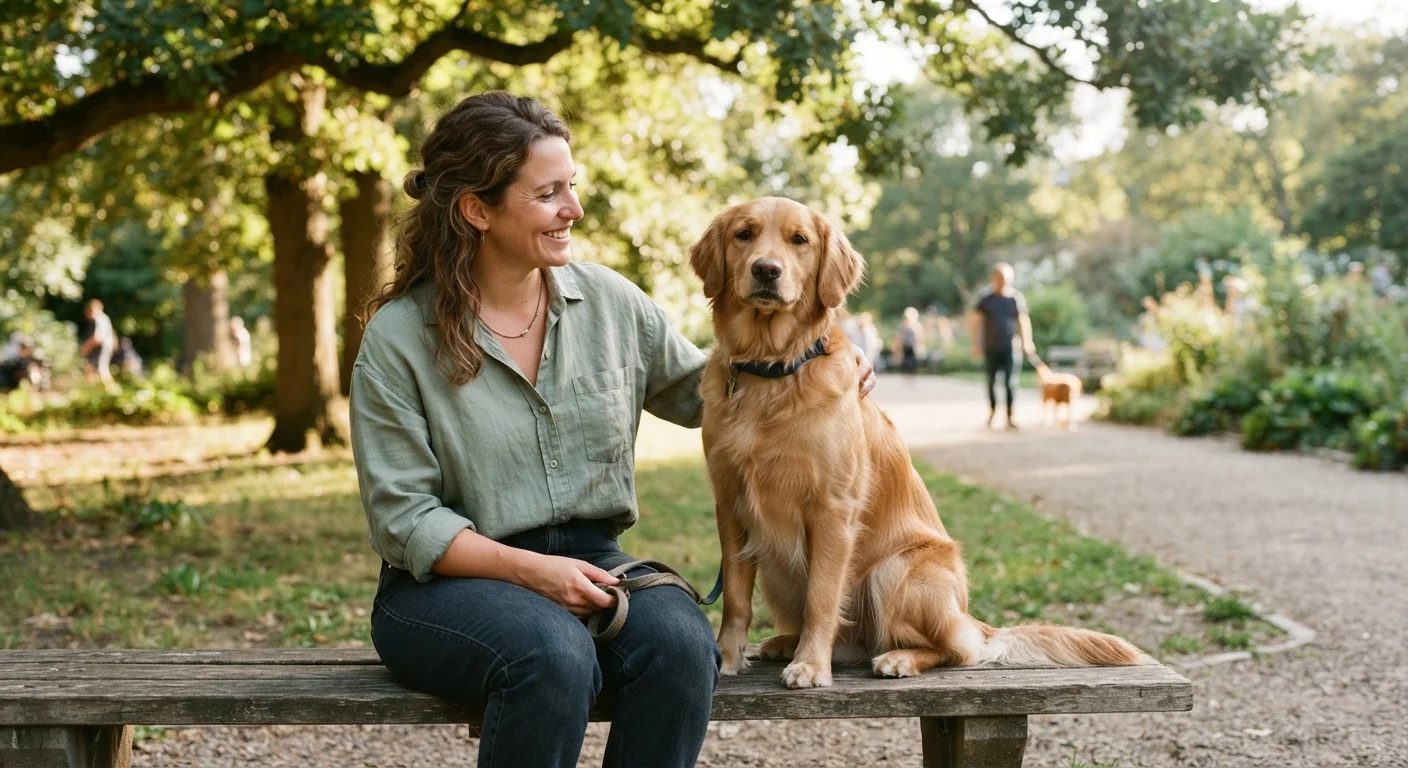
Photo: UnlockTopics.com | Unlocking Trending Content editorial
Key Takeaways
- Dominance theory in dogs was largely built on outdated wolf studies that don't reflect how dogs actually live.
- Dogs are not constantly scheming to 'take over' - most challenging behaviour stems from confusion, fear, or lack of guidance.
- Punishment-based 'alpha' techniques can damage trust and increase aggression rather than resolve it.
- Positive reinforcement, clear communication, and consistent structure are supported by current animal behaviour science.
- Understanding the real cause of a behaviour - not a dominance label - leads to more effective, humane training.
Where Dominance Theory Came From - and Why It Spread
The idea that dogs operate within strict dominance hierarchies - and that owners must act as an 'alpha' to control them - gained widespread popularity in the latter half of the 20th century. It was largely extrapolated from studies of captive wolves conducted in the 1970s, which observed animals forced together in artificial conditions competing for limited resources. Researcher Rudolf Schenkel's earlier work describing an 'alpha wolf' was widely cited and filtered into popular dog training culture.
The problem? Domestic dogs are not wolves, and wild wolves don't actually operate the way those captive studies suggested. Subsequent field research - including work by wolf biologist L. David Mech - found that wild wolf packs are typically family units where leadership emerges naturally from parenthood, not constant dominance contests. Mech himself has publicly distanced his findings from how the 'alpha' concept has been applied to dogs.
For a broader foundation on how and why animals behave as they do, see our complete introduction to animal behaviour.
Myths vs. Facts: What the Research Actually Shows
Dominance-based thinking has produced some deeply entrenched myths about dog behaviour. Each one, when examined against current behavioural science, tells a different story.
Myth
Dogs are always trying to establish dominance over their owners and other dogs.
Fact
Dogs are opportunistic social animals, but most of their behaviour is driven by learning, habit, and environmental cues - not a constant drive to dominate.
When a dog pulls on the leash, jumps up, or rushes through a doorway, it is almost never 'trying to be the boss.' These behaviours are self-reinforcing - they've worked in the past, so the dog repeats them. Attributing them to dominance misidentifies the cause and points owners toward the wrong solution. Teaching an incompatible behaviour (like sitting at the door) and rewarding it consistently addresses the actual learning history.
Myth
You must eat before your dog and always go through doors first to assert your alpha status.
Fact
Meal order and doorway precedence have no bearing on a dog's perception of your role in its life.
These rituals are rooted in dominance theory's assumption that dogs are constantly calculating social rank based on resource access. Behavioural research does not support this. What dogs do respond to is clear, consistent communication and predictable consequences for their actions. Teaching a dog to wait politely at a door is valuable - but because it's a safety skill, not a status signal.
Myth
Punishing or physically overpowering a dog establishes necessary authority.
Fact
Physical punishment and intimidation techniques reliably increase stress, fear, and the risk of aggression in dogs.
Studies published in journals such as Applied Animal Behaviour Science have found that confrontational training methods - including hitting, alpha rolls, and dominance downs - are associated with significantly higher rates of aggression compared to reward-based approaches. A dog may temporarily comply out of fear, but the underlying emotional state is not resolved and can worsen over time. This is especially concerning around children and other animals.
Myth
Allowing a dog on furniture means it will think it's in charge.
Fact
Furniture access has no documented effect on a dog's social behaviour or its responsiveness to training.
Whether a dog sleeps on the sofa is a household preference, not a behavioural variable with measurable impact on dominance. Dogs that are allowed on furniture and have clear, consistently reinforced boundaries are generally just as well-behaved - often more relaxed - than those kept off. If a dog shows guarding behaviour on furniture, that is a separate issue requiring professional guidance, not proof of a dominance problem.
Myth
A dog that doesn't obey immediately is being defiant or dominant.
Fact
Non-compliance typically signals that a cue hasn't been learned solidly enough, the dog is distracted, or it is experiencing stress or discomfort.
Defiance implies intent and moral calculation - cognitive processes that don't map onto canine behaviour the way we often assume. When a dog doesn't respond to a known cue, the most productive questions are: Has this been practised in this environment? Is the dog over-threshold (too aroused or anxious to process information)? Is there something physically wrong? These questions lead to solutions. 'My dog is being dominant' does not.
Why the Stakes Are Higher Than They Might Seem
Labelling a dog as 'dominant' or 'alpha' isn't just semantically wrong - it can lead owners toward training approaches that cause real harm. Techniques rooted in dominance theory, such as alpha rolls (forcing a dog onto its back), scruff shaking, or staring a dog down, have been linked in peer-reviewed literature to increased fear, stress, and - critically - a higher likelihood of aggression directed at humans.
Aversive Techniques Can Backfire Seriously
Understanding the real motivation behind behaviour produces far better outcomes. A dog that growls when approached at its food bowl, for example, is much more likely to be experiencing resource guarding rooted in anxiety than staging a dominance challenge. Treating it as anxiety - with desensitisation and counter-conditioning - works. Punishing the growl typically escalates the problem and removes an important warning signal.
If your dog shows aggression of any kind, consult a certified applied animal behaviourist or a veterinary behaviourist before attempting any training intervention. See also our guide to fear-based, territorial, and pain-related aggression for a fuller picture of what's really driving those moments.
What Good Leadership Actually Looks Like
Effective pet ownership does involve structure, guidance, and consistency - none of that is in dispute. The difference lies in how that structure is established. Dogs thrive when they understand what's expected of them, when their environment is predictable, and when desired behaviours are rewarded clearly and promptly.
73%
Dogs trained with aversive methods showing stress signs
A study published in Applied Animal Behaviour Science found that dogs trained with aversive methods showed significantly higher rates of stress-related behaviours compared to those trained with reward-based methods.
1 in 4
Dogs reacting aggressively to confrontational methods
Research by Meghan Herron and colleagues found that confrontational training techniques provoked an aggressive response in approximately a quarter of dogs studied.
This approach - broadly aligned with what behaviourists call positive reinforcement training - isn't about being permissive or ignoring boundaries. It's about communicating in a way dogs can actually understand, without introducing fear or pain into the relationship. A dog that sits before crossing the street because it has been taught and rewarded for doing so is just as reliably managed as one that complies out of fear - and considerably safer to live with long-term.
If you've been questioning whether certain behaviours in your dog are genuine problems or just misread signals, our pet owner self-assessment checklist is a useful starting point before escalating to formal intervention.
This article is for general educational purposes only and does not constitute professional veterinary or animal behaviour advice. For concerns about your dog's behaviour, consult a qualified veterinary professional or certified animal behaviourist.
The content on this site is for informational purposes only and is not a substitute for professional advice. Always consult a qualified professional for guidance specific to your situation.