
Everything You Need to Know About Growing Personal Savings

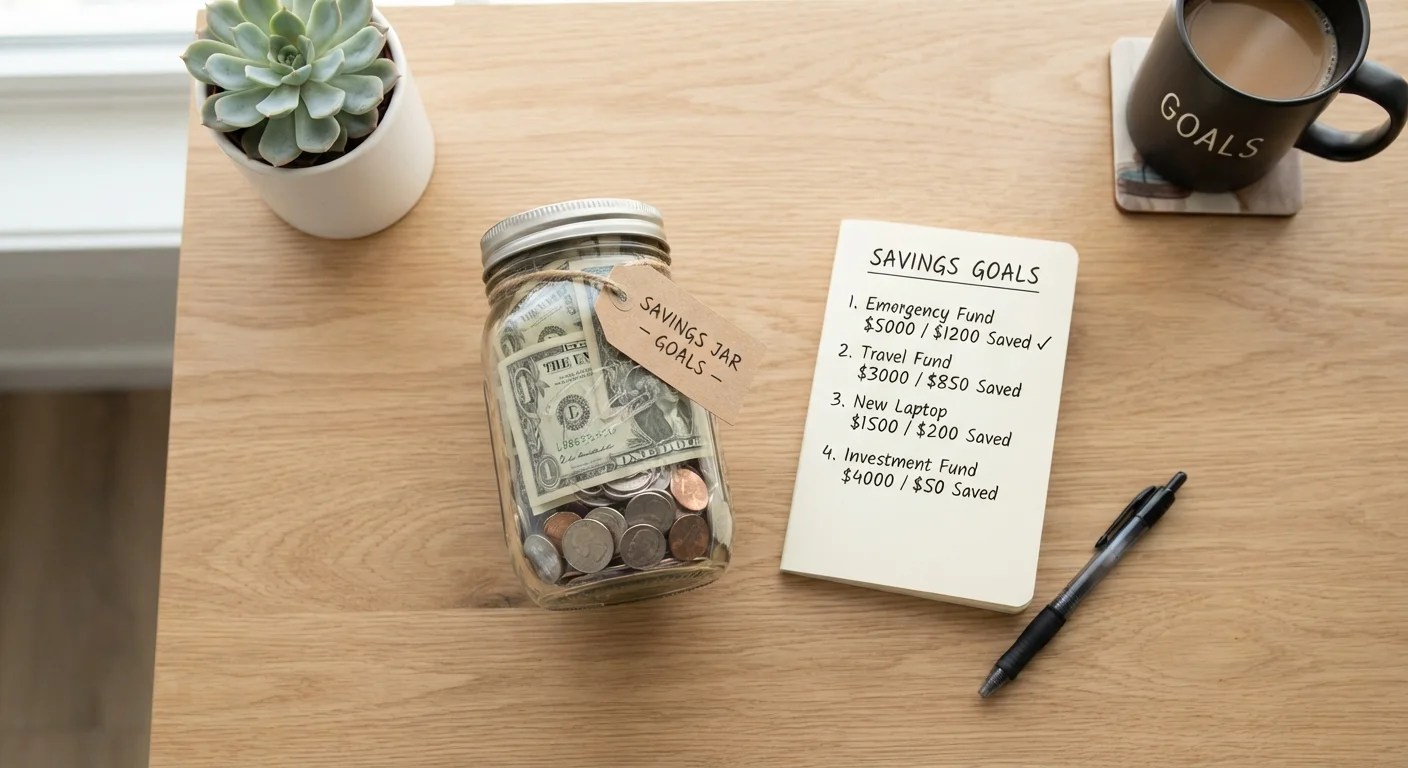
Photo: UnlockTopics.com | Unlocking Trending Content editorial
Key Takeaways
- An emergency fund of three to six months of expenses is the essential first savings priority.
- High-yield savings accounts can earn meaningfully more than standard bank accounts with the same insurance protection.
- Automating transfers removes willpower from the equation and dramatically improves consistency.
- Naming and separating savings goals reduces the temptation to raid one fund for another purpose.
- Small, regular contributions outperform large, irregular ones over time.
Why Saving Is Harder Than It Looks
Most people know they should save more. The gap between knowing and doing is where savings plans quietly fall apart. Expenses expand to meet income. Unexpected costs knock budgets sideways. And vague intentions like "save more this year" rarely translate into action.
The good news is that saving consistently is a skill, not a personality trait. It responds to structure, not willpower. This guide walks through the concrete building blocks - accounts, automation, goal-setting, and habits - so you can put a system in place that works with your actual life rather than against it.
This article is for general informational and educational purposes only. It is not personalized financial advice. For guidance specific to your situation, consider consulting a licensed financial professional.
~57%
Americans unable to cover a $1,000 emergency from savings
According to a Bankrate survey, a majority of U.S. adults would need to borrow or charge an unexpected $1,000 expense rather than pay it from savings.
3-6 months
Recommended emergency fund coverage
Most consumer financial education resources, including the Consumer Financial Protection Bureau, recommend this range as a foundational savings target.
$500-$1,000
Minimum starter emergency fund
Financial educators widely suggest this as an achievable first milestone that meaningfully reduces reliance on high-interest debt for common unexpected expenses.
Start With an Emergency Fund
Before saving for a vacation or a down payment, most financial educators recommend building an emergency fund first. This is a dedicated pool of money - typically three to six months of essential living expenses - kept somewhere accessible and separate from your everyday checking account.
Why first? Because without a financial buffer, any unexpected expense (a car repair, a medical bill, a gap in income) gets charged to a credit card or borrowed against retirement savings. That interrupts every other financial goal you're working toward.
Build Your Emergency Fund Before Anything Else
If three to six months feels out of reach right now, start smaller. Even $500 to $1,000 creates a meaningful cushion against common financial shocks. Build from there at whatever pace your income allows. The goal is progress, not perfection.
Choose the Right Account
Where you keep your savings matters. A standard savings account at a traditional bank is safe and accessible, but many pay very low interest rates. A high-yield savings account (HYSA) - typically offered by online banks or credit unions - works the same way but pays a noticeably higher annual percentage yield (APY), meaning your balance earns more over time without any extra effort.
Both types are generally insured up to $250,000 per depositor by the FDIC (for banks) or NCUA (for credit unions), so the money is protected.
FDIC and NCUA Insurance Explained
When comparing accounts, look at: the APY, any monthly fees, minimum balance requirements, and how quickly you can access funds if needed. Avoid parking long-term savings in a checking account, where the temptation to spend is higher and interest earnings are essentially zero.
Automate Your Saving
The single most effective change most people can make is automating their savings transfers. Set up a recurring transfer from your checking account to your savings account on the same day you get paid - before you have a chance to spend that money on anything else. This approach is sometimes called "paying yourself first."
Schedule your automated transfer for the day after payday, not the end of the month. Money that never lands in your checking account is money you never miss.
When you get a raise, increase your automated savings amount before you adjust your spending. It's the easiest time to save more without feeling deprived.
Most banks and credit unions make this easy to configure online. Even a small automated amount - say, $25 or $50 per paycheck - compounds over months into a meaningful balance. As your income grows or expenses drop, revisit the amount and increase it. The habit matters more than the starting figure.
For more on structuring these transfers around your pay schedule, see our guide on setting up a savings system that works with your real life.
Set Goals That Actually Stick
Saving without a specific purpose tends to stall. Attaching a dollar amount and a timeline to each goal - "$3,000 for a home repair fund by next spring" rather than "save more" - gives you something concrete to work toward and a clear signal when you've succeeded.
Many people find it helpful to maintain separate savings buckets: one for emergencies, one for a near-term purchase, one for a longer-term goal. Some banks let you label sub-accounts within a single savings relationship. Keeping goals visually separate reduces the temptation to borrow from one to cover another.
Name Your Savings Goals
When savings plans do break down - and they do for almost everyone at some point - the reasons are often predictable and fixable. Our companion piece on where savings plans break down walks through the most common failure points and how to address them.
Habits That Make Saving Last
Accounts and automation provide the structure; habits provide the staying power. A few behaviors consistently show up among people who save steadily across different income levels:
- Review monthly, not daily. Checking your balance obsessively creates anxiety without adding information. A monthly review keeps you informed without derailing your focus.
- Spend intentionally on fixed costs. Negotiating a lower insurance premium or cutting an unused subscription frees up cash that can be redirected to savings without touching your lifestyle.
- Treat windfalls as savings opportunities. Tax refunds, bonuses, and gifts are easiest to save before they've been mentally spent. Routing even a portion to savings before spending the rest is a high-leverage move.
- Revisit your plan when life changes. A new job, a move, or a growing family all shift the numbers. Savings plans aren't set-and-forget - they're living documents.
For a deeper look at which behaviors hold up across a range of incomes, see our article on savings habits that hold up across different income levels.
“Saving is a habit, not a heroic act. The goal is to make the right behavior automatic so it doesn't depend on constant decision-making.”
— Consumer Financial Protection Bureau, U.S. federal consumer financial protection agency
Building savings is less about discipline than it is about design. When the right structure is in place, saving happens consistently - even when motivation isn't at its peak.
The content on this site is for informational purposes only and is not a substitute for professional advice. Always consult a qualified professional for guidance specific to your situation.